As dusk settles over the wilderness, the thought of retreating to your tent might fill you with anticipation – Matthias tuning his guitar, Pierre-Louis prepping dinner, and Charlotte lost in a novel. But what if the unexpected happens? The stove is nowhere to be found, and your outdoor culinary skills extend only as far as opening a can. That proud declaration to Nathalie about being a bivouac expert suddenly feels a little hollow…
Don’t fret! We’re here to guide you through the essentials of fire-making. Master these techniques, and you’ll not only save the evening but earn some serious wilderness cred!
Before you strike a match, remember that the type of fire you build hinges on your immediate needs, your aspirations for the evening, and crucially, the prevailing weather and geological conditions.
Cooking a quick meal for a single night demands a different approach than sustaining warmth and food prep over several days, especially when battling the elements.
To ensure your next outdoor adventure is nothing short of serene, we’ve outlined several campfire types designed to cover almost any scenario!
The Communal Campfire: For Warmth and Socializing
This is the heart of any campsite – the flickering glow around which stories are shared, songs are sung, and laughter echoes. It’s the soul of the bivouac, providing essential warmth and light. Keeping it alive is paramount!
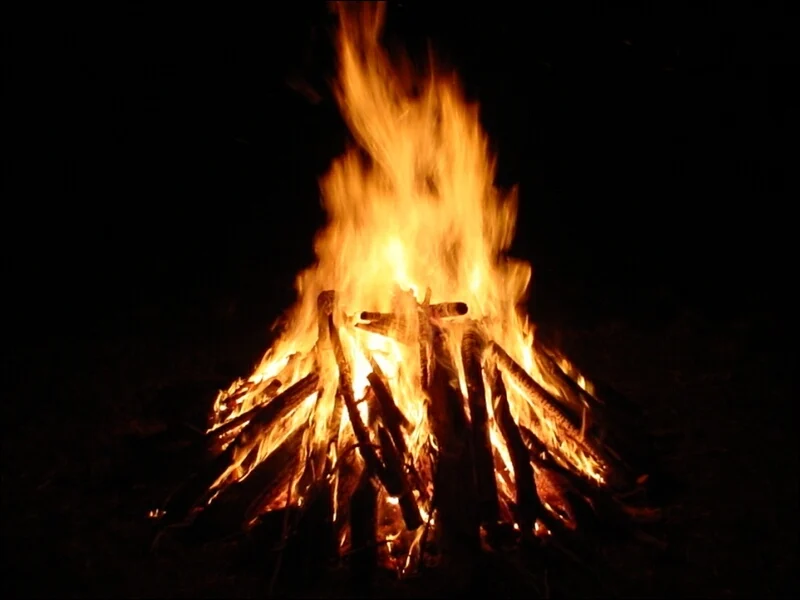
Begin by gathering some combustible tinder, such as dry leaves or paper, and nestling it at your fire’s core. Next, form a small teepee or pyramid structure using dry, small sprigs (kindling) over your tinder. Delimit the fire’s base with a square of larger logs. Then, using four longer pieces of wood, construct a larger pyramid over the initial one, filling the space with medium-sized branches. Once these catch, you can gradually introduce hefty logs. Be mindful, this type of fire can consume a significant amount of fuel, so manage your collected wood wisely to ensure it lasts through the night!
Cooking Fires: Fueling Your Wilderness Adventures
Now, let’s get down to business: building a fire to cook! This will save you from foraging for lichen and resorting to cold, canned beans, and more importantly, prevent a mutiny among your hungry companions!
Several solutions exist for a cooking fire, depending on your stay’s duration (a few hours versus several days), wind direction and strength, and the tools you have on hand. But don’t worry, we’ll keep our suggestions practical and achievable for any beginner.
Here are some techniques that will elevate you to expert woodsman status:
If the ground is rocky or you’re feeling a bit minimalist, try the Three-Stone Hearth. Find three large stones (at least 10 cm high) and arrange them in a ‘U’ shape. Build your small fire inside the ‘U’ and rest your pan directly on the stones. For more stability or to create a grill, use a few logs across the stones. Should rain threaten, a simple tarp or plastic sheet overhead can create a makeshift shelter for your cooking area.
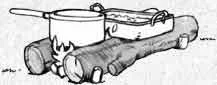
No shovel to dig a pit? No problem! The Parallel Log Fire is your friend. Locate (or cut) two large, relatively dry logs and lay them parallel to each other, about 10 to 15 cm apart. Build your fire within this channel. This ingenious setup allows you to easily boil two pots and even a coffee maker simultaneously. Life truly is beautiful, isn’t it?
“Okay, these are great, but what if the wind is strong enough to blow over an ox?” How do I cope?
Fear not, seasoned explorer, we have solutions for blustery conditions:
The Lean-to Fire requires no special tools and is excellent for starting a fire in windy conditions by providing a natural windbreak. Construct a small lean-to structure using a larger piece of wood or a rock, and build your fire underneath it, allowing it to gain strength protected from the gusts.
The “Polynesian” Fire Pit, in our opinion, offers the best balance of simplicity and efficiency. Using a digging tool (or even a sturdy stick), excavate a hole 30 to 40 cm deep. You have two main options for cooking: either suspend a pot (with a handle) over the hearth using a sturdy branch tripod, or place your pan directly on the fireplace, ensuring enough gaps for air circulation. If you’re confident in your setup, we won’t question your methods!
Finally, for multi-day expeditions, here’s THE strategy that will crown you a “Jedi Master” among your peers: For sustained heat and cooking over several days, advanced techniques like a Dakota fire pit or a self-feeding log fire (like the Swedish Torch) offer incredible efficiency and heat control, minimizing fuel use and smoke. These methods, while requiring more initial setup, prove invaluable for long-term camp living.
Keep in mind that while these techniques cover most situations, many other specialized fire-building methods exist. For ignition, those less naturally gifted can rely on readily available fire starters like organic resin sticks or ferrocerium rods, significantly simplifying the process. As for impressing Nathalie, that’s entirely up to you!
*Bear Grylls is an adventurer and survival expert renowned for his television series “Man vs. Wild.”