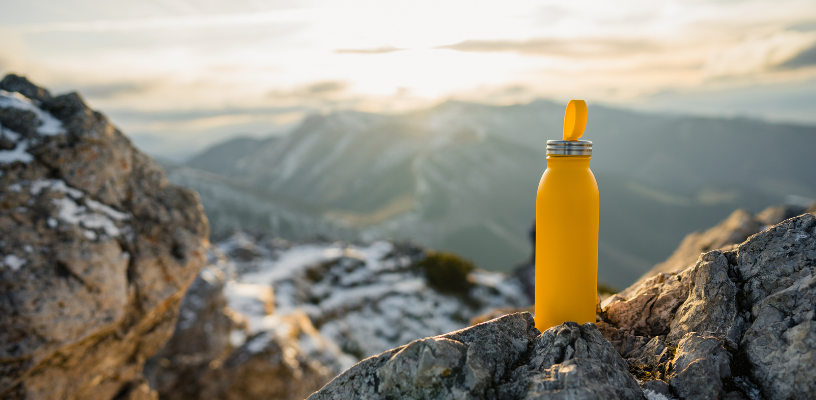
A reliable thermal mug allows you to relish a comforting coffee or hot tea during a mountain trek, while a robust tourist cup is ideal for warming water or soup on a camping trip. Unsure which mountain cup suits your needs best? We’ll clarify the differences between a thermal cup, a thermos flask, and a tourist mug, and highlight key features to consider when purchasing one of these essential containers for your outdoor adventures.
A thermal cup features double-walled steel construction with a vacuum insulation layer between the walls. This design effectively maintains the temperature of your beverage – keeping drinks hot for extended periods in cold weather, and refreshingly cold during summer expeditions. Such a mug is invaluable in the mountains, allowing you to enjoy hot coffee, tea, or Yerba mate in autumn and winter, or transport ice-cold water, chilled coffee, lemonade, or isotonic drinks on summer hikes. Market options vary in capacity, typically ranging from 250 ml to 750 ml, making it easy to find a size that fits your requirements. These containers also boast a secure, leak-proof seal, so you can safely carry them in your bag or trekking backpack without worrying about spills. Some designs even include a specialized handle for attaching the mug to your backpack, ensuring it’s always within reach.
The Versatile Thermal Mug
Beyond mountain trails, a thermal mug proves its worth in daily life – whether commuting by car or public transport, strolling through the city, cycling on chilly days, or during a fishing excursion. It’s perfect for the office or college, keeping your coffee or tea warm when you’re too busy to drink it immediately, or for sending a child to school with a hot beverage. Furthermore, using your own reusable cup can often lead to discounted prices at cafes and contributes to reducing plastic waste, making it an eco-friendly choice.
The primary distinction between different types of mountain containers lies in their intended use. As mentioned, a thermal cup is engineered to maintain liquid temperature consistently for prolonged periods, allowing you to sip your preferred drink anytime, anywhere. It comes with a watertight lid and a convenient drinking spout. In contrast, a tourist cup is designed for direct heating, making it suitable for boiling water or preparing hot tea, coffee, or soup directly on a gas stove. This makes it a superior choice for camping trips where you might pitch a tent. While it can also feature a sealing lid to help retain temperature, unlike a thermal cup, a tourist mug generally accommodates carbonated drinks without risk of leakage (carbonated beverages can cause thermal cups to leak due to pressure build-up).
Some people mistakenly believe that a thermal cup and a thermos flask are identical, but this is not the case. While both possess double walls with a layer of thermal insulation to maintain beverage temperature, a thermos typically has a significantly larger capacity than a thermal cup, often holding 1-1.5 liters, whereas cups usually cap at 750 ml. The smaller dimensions of thermal cups make them more practical and easier to carry. Additionally, thermal cups feature a dedicated drinking spout, allowing for easy and convenient direct sipping, often with a locking mechanism to prevent accidental spills. A thermos, however, usually has a screw-top stopper (sometimes with a pour-through option) and a removable cup-style lid for drinking. Thermos flasks can also incorporate a glass inner lining, which increases their weight and makes them less convenient for long, strenuous mountain treks. On the other hand, their larger capacity makes them ideal for preparing drinks for multiple people, making them better suited for family outings.
Choosing a Quality Thermal Cup: Key Features to Consider
Before selecting a specific thermal cup, reflect on how and when you intend to use it, as this will influence factors like its capacity. When buying a thermal cup, pay attention to aspects such as the material it’s made from, its sealing capability, the type of closure, and its ability to maintain your desired drink temperature.
The capacity of your thermal cup should align with your destination, trip duration, and the amount of beverage you require. Smaller versions (250-300 ml) are perfect for brief strolls. Thermal cups with capacities of 300-400 ml are suitable for several hours in the mountains, while larger models (up to 500-750 ml) are better for full-day excursions where you need more than one serving of tea or coffee.
Thermal cups are commonly made from plastic, stainless steel, or glass (more typical for coffee). Opt for a stainless steel model, as it generally offers superior heat retention. Always choose thermal cups made from BPA-free materials, as the chemical bisphenol A is harmful to health. Also, be wary of products that combine plastic and metal, as they can sometimes develop leaks where the materials join.
While challenging to assess at first glance, certain features indicate a leak-proof design, such as rubber gaskets, silicone slides, and a reliable lock to prevent accidental opening. A two-stage, spill-resistant closing system, for instance, is often an excellent choice.
In autumn and winter, a quality thermal cup can keep a hot drink warm for approximately 6 hours, with advanced models offering even longer temperature retention. You can further extend heat retention by pre-heating the cup with hot water for about 5 minutes before adding your coffee or tea. In summer, a thermal cup is invaluable for keeping drinks cool; beverages typically maintain a low temperature for at least 12 hours. A truly good thermal cup will remain cool to the touch (especially the handle, lid, or mouth) even when filled with a hot drink, confirming its effective insulation.
Thermal cups can feature a simple drinking spout or a screw-on lid with a push-button release, sometimes with a color indicator to show if it’s open or closed. Popular spouts, often made of silicone or PP plastic, enable comfortable direct sipping, reducing the risk of burns from hot liquids. Look for models designed for single-handed operation, which is particularly useful when driving or when wearing gloves in winter.
The market offers a wide array of thermal cup shapes and designs – from those resembling classic handled mugs to sleek bottle-like containers. If you frequently travel by car, consider a thermal cup with a conical base, as this shape often fits well in car cup holders and is comfortable to hold. Choose a model with a stable, non-slip base, an ergonomic handle, or one with a matte, textured finish that provides a secure grip. Ensure the thermal cup has easily detachable and cleanable parts (the cap and lid), especially if you enjoy milky coffees, and ideally, that it’s dishwasher-safe.
In addition to a thermal cup, a tourist cup is an essential item for mountain excursions, camping, or trekking, serving not only for drinking but also for boiling water or preparing hot meals. A travel cup with a lid is a practical choice when moving a drink from one place to another without spillage, and for keeping contents warmer for longer.
What to Look For When Buying a Tourist Cup:
- The material: Stainless steel, aluminum, or titanium are excellent choices, with titanium being particularly robust for extreme conditions.
- Capacity: This depends on its intended use. If you plan to use it for cooking freeze-dried meals in addition to tea or instant soup, a capacity of 400-500 ml is recommended.
- Shape: Tourist cups typically have a straightforward design, often with foldable handles, which is an excellent space-saving feature for your backpack.
When selecting a quality thermal cup, it’s always wise to opt for a product from a reputable brand rather than a cheaper alternative. Budget options often fail to maintain heat for long, tend to be less leak-proof, and are made from lower-grade plastics that can impart unpleasant odors to your drinks. Moreover, their durability is typically inferior to that of well-constructed stainless steel thermal cups with airtight seals and easy cleaning. Similarly, for a tourism cup, performance and construction quality are paramount. At Pei Sportiano.ro, you’ll discover high-quality thermal and tourist cups from trusted manufacturers such as: Kambukka, Tatonka, Fox International, Delphin, and Ridgemonkey.