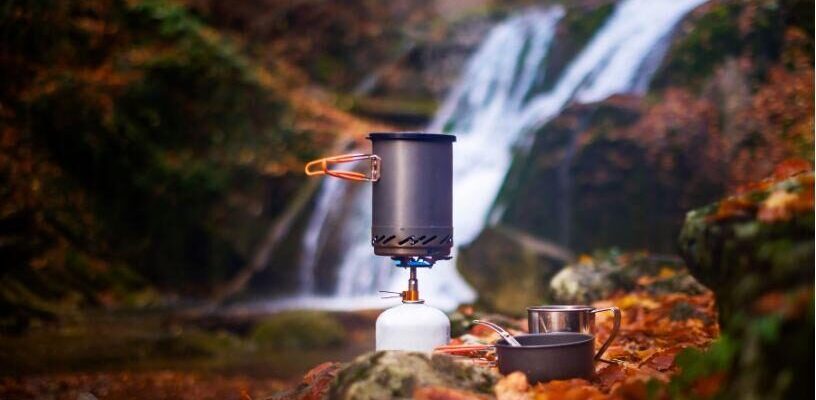
When venturing into the wilderness, be it for a weekend camping trip or an extended backpacking expedition, access to hot food and drinks is essential. Unlike urban environments, restaurants are rarely at hand. This article will guide you through the diverse world of portable outdoor stoves, helping you understand their various types and crucial factors to consider when selecting the perfect model for your adventures.
The term “camping stove” encompasses a vast array of portable cooking devices. This broad category ranges from electric models that mimic home appliances to ultra-lightweight minimalist stoves weighing mere ounces, and even sophisticated integrated cooking systems designed for extreme winter expeditions.
Portable stoves are powered by a variety of fuel sources, including:
- Gas (Propane, Butane, Isobutane)
- Liquid fuels (Petrol, Kerosene, Paraffin)
- Alcohol
- Solid fuel tablets
- Electricity
- Wood
Each of these devices is engineered to facilitate meal preparation in outdoor settings. However, specific models are optimized for different conditions and uses. Therefore, choosing a hiking stove that perfectly aligns with your intended activities is paramount.
If your plans primarily involve car camping at established sites, there’s no need to opt for ultra-lightweight solutions. Instead, prioritize comfort and convenience. For family trips or group gatherings, a two-burner camping stove (such as the Outwell Maxi Appetizer or the CAMPINGAZ 200-S) can be an excellent choice, enabling efficient meal preparation for several people.
At campsites, and even in more remote settings, gas stoves are incredibly popular. For enhanced safety, it’s often advisable to choose models that connect to a gas canister via a longer hose, rather than those that screw directly onto the cartridge. Stoves with stable legs and a remote fuel connection offer greater stability and reduce the risk of accidents.
When camping at sites with electrical hookups, an electric portable stove becomes a viable option. Electric models are praised for their user-friendliness, offering intuitive temperature control and rapid heating. You can select from traditional coil-element stoves, ceramic hobs, or modern induction cooktops. Induction models are particularly energy-efficient and may offer advanced features like specific cooking programs (frying, boiling, warming) and the ability to adjust heating zones to pot size, minimizing energy waste.
Electric appliances are generally considered safer than open-flame gas stoves, often featuring overheat protection systems. A significant advantage is their quick cooling time once switched off. A key specification to consider is the device’s power output. Higher wattage means faster cooking but also increased electricity consumption. However, for campsite-only use, energy efficiency might not be the top priority.
For avid hikers and backpackers seeking a stove to carry in their backpack, lightweight and compact models are essential. Fuel availability is another critical consideration. If flying, remember that fuel cartridges are typically prohibited in luggage. Always check if you can purchase compatible fuel at your destination. If not, a gas stove might be impractical. In such cases, liquid fuel (petrol, alcohol), solid fuel, or a versatile multi-fuel stove would be a better choice.
Also, factor in the climate and altitude of your camping area. A stove that performs flawlessly during a summer trek might struggle in winter conditions. Both temperature and air pressure play a role. Gas stoves, for example, can be less efficient in extreme cold and at high altitudes. This is crucial not only for cooking hot meals but also for essential tasks like melting snow for water.
Before your trip, assess how many people will be using the stove. Choose equipment with appropriate capacity and ensure your cookware is sized accordingly to minimize meal preparation time.
Below, we delve into some popular stove types ideal for serious mountain excursions and tent camping.
For trekking adventures, weight and size are paramount. For summer trips at lower elevations, where harsh weather isn’t a major concern, a mini gas stove burner that screws directly onto a cartridge is an excellent solution.
These devices are incredibly simple (e.g., the Optimus Crux hiking stove weighs only 83g) and surprisingly compact. While their power output might be lower than larger camping models, they are perfectly adequate for cooking a hot meal or boiling water for tea or coffee.
A mini cartridge stove offers more than just portability. Gas-burning units are generally easy to clean, saving you tedious maintenance time. The main drawback is their reduced performance in strong winds and winter conditions.
The integrated cooking system, pioneered by the American brand Jetboil, revolutionized outdoor cooking and inspired numerous other equipment manufacturers.
The core concept is to combine a burner with a specially designed pot to maximize efficiency and minimize energy loss. In these systems, the stove’s flame is better shielded from wind gusts. Additionally, the pot often features a heat exchanger (radiator fins) on its base, which significantly accelerates heating and reduces cooking time.
Integrated systems typically include a neoprene cozy around the pot. This serves a dual purpose: it protects hands from burns and helps retain heat, keeping food warmer for longer. Often, a built-in piezo igniter, creating a spark with a button press, is also included.
Jetboil cooking systems are favored by outdoor enthusiasts of all levels. They are suitable for casual summer camping trips by a lake, as well as demanding expeditions in extreme winter conditions or high-altitude climbing.
These models are meticulously engineered to address various challenges encountered in nature. For instance, if you’re on uneven terrain and worried about the stove tipping, some systems offer accessories to hang them from a tent ceiling, a tree, or a rock using special ropes.
At sport.ro, you can find various integrated cooking systems like the Jetboil New Flash Set Wild Set, Jetboil New Minimum Set Carbon, or the Primus Lite Plus Stove System.
This type of portable stove is particularly popular among those planning winter expeditions and high-altitude treks. In harsh conditions, liquid fuel stoves generally outperform gas models. A significant advantage of these devices is the widespread availability of liquid fuel; you can often find petrol or kerosene at almost any gas station.
Liquid fuel stoves are not always the simplest to operate. A common drawback is that they can get messy during use (especially with lower-quality fuel), requiring more time to clean the fuel line and nozzle. Additionally, your pots may also accumulate soot.
An alcohol stove offers five main advantages. Firstly, procuring fuel is rarely an issue. Secondly, these devices have a reputation for reliable, trouble-free operation and are typically very affordable. They are also known for their low weight, making them a favorite among minimalist backpackers, and are easy to keep clean.
However, an alcohol stove is best suited for less extreme mountain journeys. It’s an excellent option for summer excursions where high power isn’t necessary, appealing to those who appreciate simple, reliable solutions.
An example of such a model is the brass ESBITITAT OTTONE ALCOLULE BRIGER, measuring 4.6 x 7.4 cm and weighing 92 g. Despite its straightforward design, this model features a practical, continuously adjustable flame system.
The first type of solid fuel stove burns compact fuel tablets, which are highly convenient for transport. They are characterized by their very simple construction (often just a foldable stand made of metal plates) and extremely low weight. These are primarily for summer hikers who don’t require high power or performance. In a similar vein, wood-burning stoves are an interesting outdoor curiosity. While similar in design to solid fuel stoves, they utilize dry twigs or bark as fuel. Since the fuel is essentially free, these stoves are incredibly economical to operate. Unfortunately, their efficiency can be low, and lighting a fire can be challenging or impossible in wet conditions.
Do you have ambitious plans and need a versatile stove offering high efficiency and unwavering reliability? Consider investing in an advanced model capable of burning multiple fuel types. In this category, you’ll find dual-function models that can switch between gas and liquid fuels. But the options don’t stop there. If you’re preparing for the most challenging conditions or planning to visit remote corners of the world, opt for a stove with an exceptional fuel compatibility range, such as the Optimus Polaris Optifuel. This model is engineered to burn various gases (propane-butane, isobutane) and liquid fuels (petrol, paraffin, diesel, white gas, and even aviation fuel). A multi-fuel travel stove is the most comprehensive choice, highly recommended for those camping in diverse global environments, especially in severe winter conditions and at high altitudes.
Whether you’re packing your tent for a serene getaway or lacing up your boots for a strenuous hike, a reliable device for preparing hot meals is indispensable. You need a camping stove that perfectly aligns with your adventure plans and aspirations. You can find high-quality outdoor cooking equipment from renowned brands like Jetboil, Primus, Best, Campingaz, Esbit, Outwell, and Coleman at the Sport.ro shop.