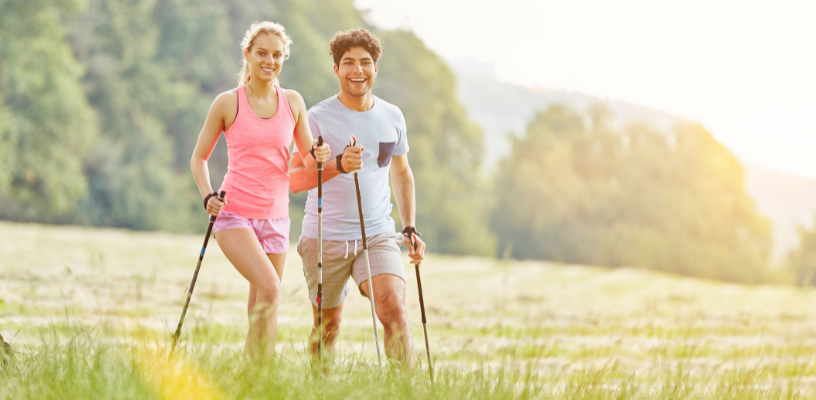
Embracing Nordic walking with the correct technique offers a transformative path to weight loss, improved physical conditioning, and enhanced muscle strength. However, to truly reap these rewards and avoid injury, mastering the proper walking method is essential. How can you walk effectively with Nordic walking poles to see results after just a few sessions and stay safe?
Nordic walking, a dynamic form of exercise using specially designed poles, originated in Finland. It was initially developed as a summer training method for cross-country skiers, allowing them to maintain their fitness off-season. Today, it has evolved into one of the most beloved recreational activities, cherished by countless individuals across all ages, fitness levels, and physical conditions. Its therapeutic benefits are widely recognized, making it a staple in rehabilitation programs. Furthermore, a growing community actively participates in competitive Nordic walking events. A significant advantage of this activity lies in its simplicity: it requires minimal specialized equipment (just well-chosen Nordic walking poles), is accessible regardless of one’s physical condition, and can be enjoyed year-round on diverse terrains.
What Are the Key Advantages of Nordic Walking?

-
Strengthens the muscles of the legs, core, back, arms, and shoulders.
Virtually everyone—from children and adolescents to adults and seniors—can experience the profound benefits of walking with Nordic walking poles. One primary reason is the exceptionally low risk of injury when adhering to the correct walking technique. The strategic use of poles significantly reduces stress on the lower limbs and spine, while also improving balance (providing additional support to minimize the risk of stumbling, falling, etc.). This makes it an ideal form of physical activity for elderly individuals or those who are overweight or obese. It’s a safe and effective exercise for pregnant and postnatal women aiming to maintain their physical condition, for individuals returning to sport after an injury, or even former professional athletes who, due to an accident, can no longer pursue their career but wish to stay active. It’s an excellent method for stimulating blood and lymph circulation, making it particularly suitable for people prone to swelling in the upper and lower limbs or those with circulatory issues. Nordic walking is also highly recommended for individuals managing diabetes, hypertension, and Parkinson’s disease.
Do you have a sedentary job, feel stressed and tense, or simply want to diversify your workout routine? Incorporating systematic pole walking can alleviate back pain, promote relaxation, and provide a comprehensive full-body workout.
Nordic walking can be a fantastic group activity, offering a wonderful opportunity to socialize, connect with like-minded individuals, and boost motivation for consistent physical activity and healthier habits.
When you walk with Nordic walking poles, it’s crucial to maintain a natural, fluid movement—mirroring that of a vigorous normal walk. Your posture should be upright (gently engaging your core), with a slight forward lean (avoiding arching your back), relaxed shoulders, and your gaze directed forward. Below, you’ll find the most critical points for executing the correct pole walking technique.
Choosing the Right Poles
Selecting poles appropriate for your height is paramount. When your elbow is bent at a 90-degree angle (for those familiar with the technique) or 100 degrees (if you’re a beginner), the poles should comfortably touch the ground. You can calculate the ideal pole length using these formulas: height (cm) x 0.68 for beginners, or height (cm) x 0.72 for more advanced practitioners.
You can opt for adjustable or fixed-length models. Adjustable poles offer greater versatility, allowing you to fine-tune the length for different terrains or workout intensities. For more detailed guidance, refer to our article on choosing the right Nordic Walking Poles.
The Essential Warm-up
A thorough warm-up is an indispensable component of every Nordic walking session, preparing your muscles, joints, and tendons for the upcoming exertion. This phase should last approximately 10-15 minutes. Effective warm-up exercises include: arm swings and rotations forward and backward, torso twists and bends, hip rotations, overhead pole stretches, knee lifts, leg swings forward, backward, and sideways, pole rows behind the back and to the side, and “silent rotations” (dynamically shifting weight from foot to foot with arm swings, rather than jumping).
Hand Movement and Pole Grip
To begin, slide your hands into the pole straps (gloves) and grasp the handles, ensuring the strap is snug. The forward motion of your arm should originate from the shoulder and continue until your hand reaches waist level. Your hand should extend relatively straight, maintaining alignment with the pole. Simultaneously, as your trailing arm swings behind your hip line, your hand should relax its grip, allowing the pole to swing freely from the strap. The pole should strike the ground at a 45-degree angle, typically between your legs or slightly behind your back foot. Keep your arms close to your torso. The fundamental coordination in Nordic walking is reciprocal: when your left arm is forward, your right leg moves forward, and vice-versa.
Proper Foot Placement
Stand with your feet parallel, hip-width apart. When engaging in Nordic walking, place your foot down starting with the heel, rolling smoothly through the arch, and pushing off powerfully with your toes, especially your big toe. Aim for a slightly longer stride than you would take during a normal walk.
Optimal Distance and Intensity
Given the significant energy expenditure of Nordic walking, it’s wise to begin with shorter distances as you start your journey. Initially, aim for about 30 minutes of walking in your neighborhood at a moderate pace (you should be able to converse comfortably without feeling out of breath). You can intersperse segments of pole walking with dynamic walking without poles. Choose flat terrain that doesn’t demand excessive effort. As your technique refines and your fitness improves, gradually extend your route, increase the difficulty of the terrain, and intensify the duration and pace of your walks.
Appropriate Clothing and Footwear
The foundation for an effective pole walking experience is comfortable footwear with a stable yet flexible sole, featuring appropriate tread for the terrain and adequate cushioning (such as specialized foam in the heels). Thermal, breathable clothing that is flexible and non-restrictive is highly beneficial, as it effectively wicks away moisture. For longer walks, consider carrying a small hiking backpack containing a lightweight rain jacket, training gloves, a hat or multifunctional scarf, and a water bottle or hydration pack. In colder seasons, embrace the “onion” layering principle: start with thermal underwear, followed by a thermal or fleece shirt, and topped with a functional winter jacket.
Nordic walking stands out as an excellent form of exercise for weight loss because it engages approximately 90% of the muscles in your body. Furthermore, it works both upper and lower body muscles equally, making Nordic walking up to 40% more effective than classic walking and enabling you to cover greater distances without becoming breathless. This results in more efficient body fat reduction and a faster metabolic rate. During a typical Nordic walking session, you can burn approximately 400 kcal (varying based on gender, age, weight, and pace), whereas standard slow-paced walking typically burns around 200-280 kcal.
So, how should you walk with poles to maximize weight loss? Above all, consistency and correct technique are paramount. According to the Nordic Walking Polish Association, for weight management, you should train 1-3 times per week for 60-90 minutes, maintaining a moderate rhythm (you should be able to speak freely without feeling breathless). Remember that the best results emerge from combining regularity with a balanced diet and sufficient recovery.
Adhering to the correct technique when walking with poles is a crucial factor for achieving your desired outcomes and preventing discomfort. What common mistakes should you actively avoid in Nordic walking?
-
Clenching the pole handles continuously, rather than relaxing your grip and allowing the pole to swing from the strap as your hand moves behind your hip. The specialized glove-like straps are designed to prevent you from losing the poles.
A correct Nordic walking technique will significantly help you avoid pain and injuries. If you are new to this sport, strongly consider taking a course with a professional instructor who can assess your movement, provide personalized feedback, and help you correct any errors from the outset.