Embarking on outdoor adventures, whether cycling through city streets, trail running in the wilderness, or trekking across mountain landscapes, particularly during unpredictable transitional seasons, demands appropriate gear. A high-quality rain jacket is an indispensable component of this preparation, shielding you from sudden downpours and persistent wet weather. But with so many options, how do you select the ideal one to ensure effective protection during your specific physical activity?
Enduring long periods in damp clothing combined with biting winds is not merely uncomfortable—leading to increased chill and the burden of waterlogged fabric—but can also pose significant health risks. Furthermore, adverse weather can severely dampen spirits, often causing individuals to abandon their regular exercise routines. Therefore, a reliable rain jacket is crucial for any outdoor enthusiast. Its inherent protective qualities mean you no longer have to forgo training sessions or cherished active leisure time, thanks to advanced membranes designed to repel moisture. These specialized technologies include:
-
Futurelight™, Hyvent™, Dryvent™ (The North Face),
-
DryTechnology® (Mammut),
-
Outdry™ Extreme (Columbia).
These innovative materials effectively block rain droplets from penetrating the inner layers, simultaneously acting as a wind barrier and ensuring optimal air circulation. Rain jackets are typically lightweight and designed to pack down into a compact size, minimizing bulk and making them effortless to carry. Their functionality becomes particularly invaluable during extended trips, cycling routes, or running sessions, especially during those unpredictable seasonal shifts when weather conditions can change in an instant.
One of the most critical specifications of a rain jacket is its waterproof rating, quantified in millimeters of water column per square meter of fabric. What does this measurement signify practically? It refers to the membrane itself: a finely engineered layer perforated with microscopic pores. These pores are significantly smaller than water droplets, preventing external moisture from passing through. Conversely, they are larger than water vapor particles, allowing for efficient dissipation of body moisture (sweat) from the inside out. This dual protection guards against both external wetness and internal overheating. Thus, if you encounter a waterproof index of, say, 20,000 mm H2O, it indicates the fabric can withstand the pressure of a 20,000-millimeter column of water over a 1 m² area before water begins to seep through. For challenging, extreme climates or prolonged heavy rainfall, selecting a jacket with a waterproof rating of at least 10,000 mm H2O is highly recommended. For less intense, but still significant, wet conditions, a range between 5,000 and 10,000 mm H2O can suffice.
The second pivotal metric to evaluate when purchasing a rain jacket is its breathability. This is typically expressed as the number of grams of water vapor that can pass through one square meter of fabric in 24 hours (e.g., 10,000 g/m²/24h). For low-intensity activities, a minimum breathability of 5,000 g/m²/24h is advisable. Alternatively, this parameter can be determined by the RET (Resistance to Evaporative Heat Transfer) coefficient, which gauges the membrane’s resistance to water vapor. A lower RET value signifies better breathability; for very strenuous efforts, an RET between 0 and 6 is optimal, while for moderate activity, up to RET 13 is a good choice. A RET value exceeding 20 generally indicates a jacket unsuitable for physical exertion.
Generally, higher values for both waterproofing and breathability correlate with superior rain jacket performance. However, it’s essential to align these specifications with the specific type of activity and environmental conditions you anticipate.
Beyond impermeability and breathability, rain jackets are classified by their laminate construction, which describes how external layers, internal layers, and membranes are combined. Key distinctions include:
-
2L (Two-Layer): In this construction, the waterproof membrane is bonded directly to the outer fabric, with a separate, unattached internal lining providing protection and comfort. This is a common and versatile option.
-
2.5L (Two-and-a-Half-Layer): Here, the membrane is bonded to the outer fabric, but the interior protective layer is a printed pattern or coating rather than a separate liner. This results in a lighter, more packable jacket.
-
3L (Three-Layer): This advanced laminate fuses the outer fabric, the membrane, and the inner lining into a single, cohesive unit. This design significantly enhances durability, reduces weight, and often provides superior performance compared to its predecessors.
It’s also imperative to consider Durable Water Repellent (DWR) impregnation. This surface treatment is applied to the outer fabric, causing water to bead up and roll off the material rather than soaking in, thus maintaining a high degree of water resistance and preventing saturation.
While membranes and laminates are fundamental, they are not the sole determinants when selecting a rain jacket. Other crucial design elements include:
-
Hood: An effective hood should be integrated, highly adjustable, and designed to ensure excellent peripheral visibility while worn. A reinforced visor or brim can further prevent water from dripping onto your face.
-
Zippers: Opt for waterproof zippers (often laminated or covered with a protective flap) and ensure they have an internal storm flap to prevent cold spots and snags on underlying clothing.
-
Ventilation Openings: Strategically placed vents (e.g., underarms or back) are vital for regulating body temperature and enhancing airflow during intense exertion.
-
Cut and Fit: The jacket’s cut should align with your intended activity and body type, allowing for unrestricted movement. For athletes, tailored or athletic fits are common, conforming well to the body. Renowned brands offering practical and high-performance rain jackets for women and men include Columbia, The North Face, Black Diamond, Mammut, Salewa, CMP, and others.
Specialized Rain Jacket Types for Different Activities
The market offers a diverse range of rain jackets, each featuring specific tailoring and functionalities to enhance comfort and safety during distinct activities such as cycling, running, or various forms of mountain exploration.
Cycling Rain Jackets
For shorter rides and casual cycling, a lightweight, packable rain jacket crafted from thinner material that can be easily stowed in a jersey pocket is often sufficient. However, for extended tours or more serious cycling, a robust jacket with a 2.5L or 3L laminate construction is a superior choice.
When selecting a cycling rain jacket, prioritize features like an extended back and sleeves (to protect against cold and splashes while in a cycling position), an adjustable hood that fits comfortably over a helmet, and snug cuffs to keep wind out. Reflective elements are paramount for increasing visibility in poor weather or after dark, and additional pockets with waterproof zippers are ideal for safeguarding essentials like keys, phones, or small bike tools.
If you typically cycle with a backpack, which applies additional pressure to the jacket fabric, opt for a rain jacket boasting a waterproof rating exceeding 10,000 mm H2O. In terms of breathability, look for models with an index of 10,000-15,000 g/m²/24h to manage perspiration effectively.
Running Rain Jackets
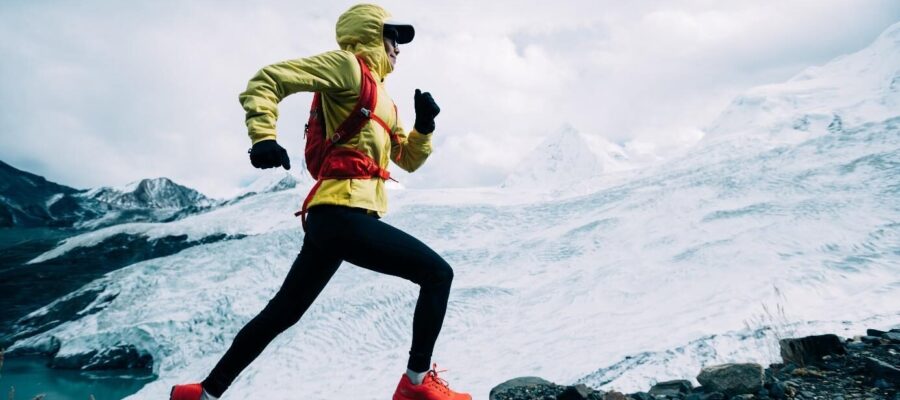
A rain jacket designed for running must offer reliable protection from heavy showers or persistent rain while simultaneously ensuring unhindered movement and efficient moisture wicking. During spring and autumn, it serves as a crucial outer shell, or the outermost layer in a layering system. In colder months, it can function as an insulating mid-layer beneath a winter running jacket.
An appropriate running rain jacket should integrate a DWR layer in addition to specialized membranes. Essential features include adjustable drawcords at the hem (for ventilation control), an ergonomically designed hood that provides a wide field of vision, comfortable easy-access zippers and pockets, taped seams for full waterproofing, and critical reflective elements for safety. For breathability, a coefficient of 10,000 g/m²/24h or higher is recommended, especially if you run with a hydration pack or backpack (in which case, aim for an even higher parameter). It’s worth noting that a rain jacket is often mandatory equipment in most ultra-distance races.
Mountain Rain Jackets
For mountain expeditions, minimum values for water resistance are generally 10,000 mm H2O and 10,000 g/m²/24h for breathability. For truly extreme conditions and torrential rains, choose a model with a waterproof rating of 20,000 mm H2O or more. For lighter hikes or less demanding treks, a model with a 2L laminate and a DWR treatment may be sufficient.
Opt for a mountain rain jacket with a regular cut, allowing for the comfortable application of additional layers underneath. Adjustable cuffs and hem drawcords are vital for a snug fit when weather deteriorates, sealing out wind and rain.
Ensure the jacket features waterproof zippers, preferably covered with a laminated flap or protective patch, and equipped with an internal storm flap to prevent drafts and snagging. YKK zippers are highly regarded for their durability and waterproof capabilities, found on premium rain jackets like the Mammut Crater HS and Black Diamond Liquid Point.
A mountain rain jacket should always have an adjustable hood (crucial for activities like via ferrata or climbing where a helmet is essential) and a protective visor for enhanced face coverage. Bonus points for materials reinforced in high-wear areas, such as the shoulders (to withstand backpack abrasion) or elbows (for climbing activities).