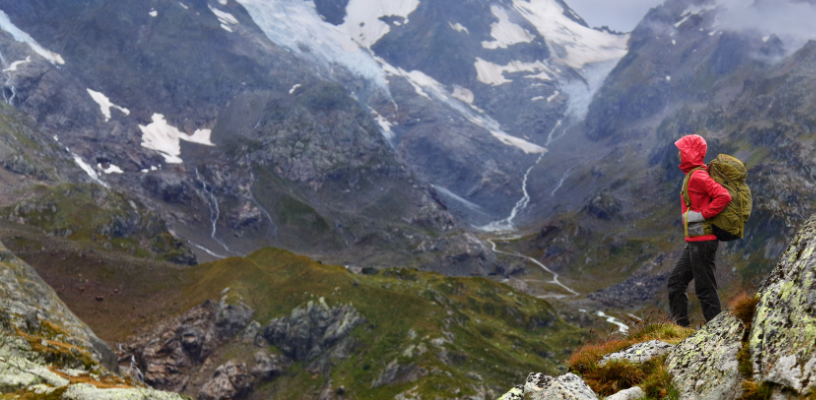
The Hardshell jacket is designed to provide effective protection against extreme weather conditions. In addition, it will check well wherever you need resistant external clothing: during mountain tourism, ice climbing or winter climbing. Here we tell you what is more precisely a tough, what properties has and what differs from Softshell.
Hardshell is a type of jacket with a microporous membrane that prevents the water from penetrating the fabric, protects from the wind, while eliminating water vapors and allows the skin to breathe.
How is a rigid jacket built? It consists of 2, 2.5 or 3 strata, which can be built by combining the membrane with the external layer and adding a mesh coating (2L-bi-led) or a print (2.5l-bi-seki Milamino) or all layers are permanently combined (3l-term). The latest version is the most lasting option of the rigid jacket. It is composed of:
- Outdoor fabric usually produced by nylon or polyester, which guarantees high duration and protection of the material against mechanical damage, such as abrasion;
- An intermediate layer in the form of a completely waterproof and breathable membrane. This is often Gore-Tex®.;
- The internal layer of the fabric that protects the membrane and reduces friction, ensuring freedom of movement under the jacket.
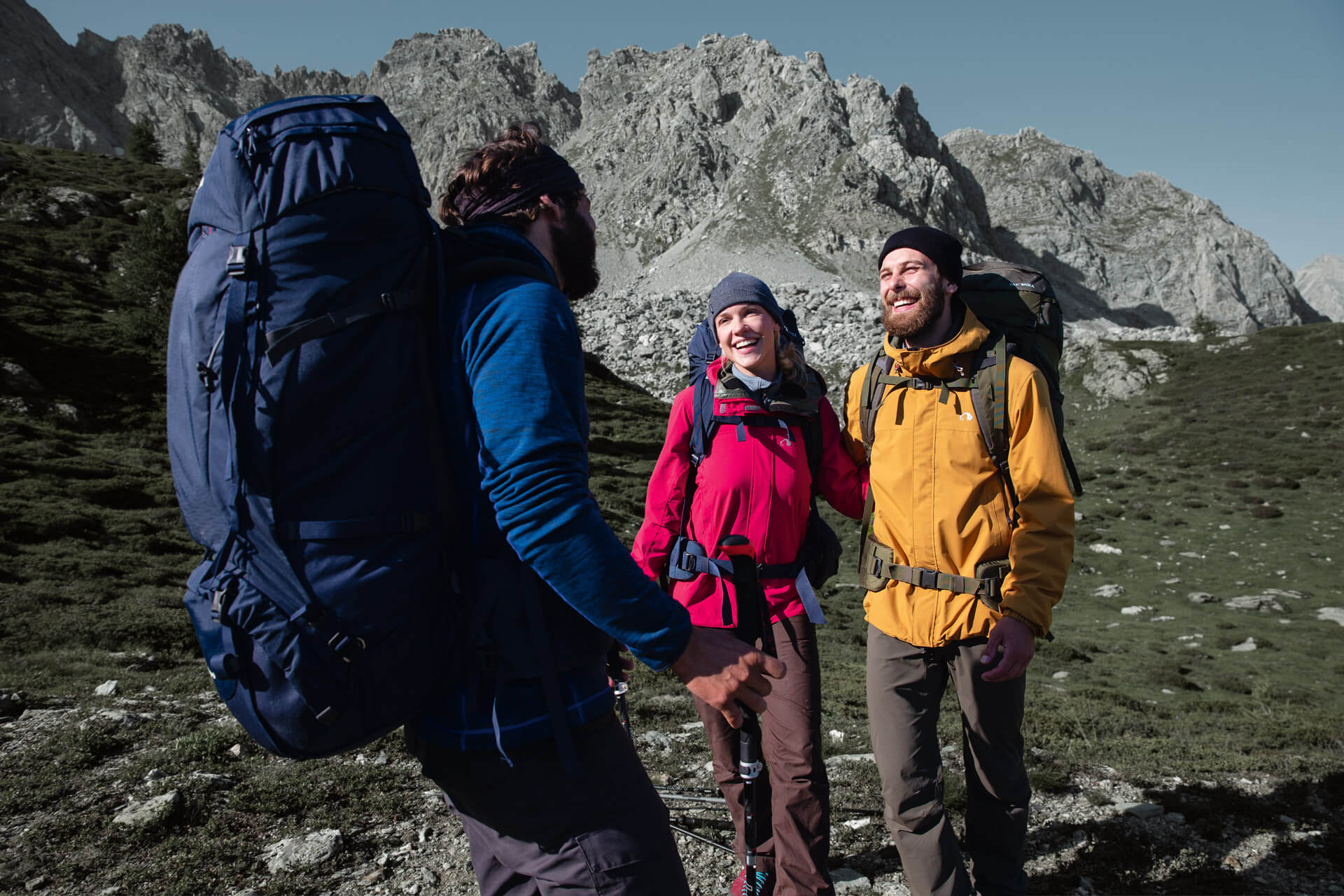
Rigid jackets usually have an additional level DWR (repellent repellent) on the external layer, which creates an effective barrier in refusing water from the surface of the material. In addition, DWR impregnation contributes to the good breathability of the hard.
The main task of the rigid type jacket is to guarantee the complete protection against the penetration of the rain or see wet inside, thanks to it the rest of the remaining clothes dry. The complete waterproof is guaranteed by smaller micropors of the size of a water particle. On the other hand, the micropors are larger than a water vapor molecule, which is exposed by the absorption of excess humidity from sweat during physical exercises. Hardshell is isolating the wind effectively, which helps protect from the cold, but not necessarily from heat losses.
The membrane jackets are usually quite thin, which makes them simply packed in a light backpack, which you will appreciate in the case of long, several days or weeks. Another advantage of a rigid jacket – is usually made with robust materials, so it can serve you for several years. Since it is mainly designed to act as a barrier against the penetration of humidity, it has slightly lower breathability. The rules can be supplied with hinged hole holes, usually located in the underground area, to guarantee adequate air circulation.
Another disadvantage of membrane jackets is that they are usually made with rigid materials, which can influence the freedom of movement and the comfort of wearing: the material is not very pleasant for the touch. In addition, the disadvantage can be represented by the noise of the fabric while you move. It is worth adding that to maintain the hydrophobic properties of a lines, it must be adequately cared for and washed, according to the manufacturer’s recommendations.
As we have already mentioned, the hard shell is a special load jacket, which is the best option for extreme weather conditions, in which you want complete protection against rainfall and wind and not necessarily a high air circulation or high thermal comfort.
Softshell are often made with densely fabric synthetic materials, with the addition of Elastano, so that the fabric is elastic (also in 4 directions), to ensure a better measure for the user and a wide range of movements. It can be equipped with an additional membrane, a polar or flush coating. Its purpose is to protect from the wind and from rainy minors, while providing thermal comfort and breathability for very high intensity exercises. Although high quality softshell jackets are treated with a DWR layer, it is not effective as a hard shell: making light rain or snow.
The choice between Softshell and Hardshell is decided, among other things, depending on: the type and intensity of physical activity, the weather conditions, correspondence and freedom of movement or the ability to regulate thermal comfort.
Choose Softshell for high intensity external activities (for example, cycling, mountain running, cross -country skiing, backcoach, etc.) and for short excursions for several hours. It will demonstrate its usefulness every time you need maximum comfort, total freedom of movement and high breathability, wind protection, while there is a low risk of prolonged rainfall. Softshell is an optimal solution especially for dry and cold days. It is ideal as an intermediate layer under a cast iron jacket when it rains and as a higher layer in more favorable conditions, when you need further thermal comfort.
The rigid are an excellent option for those who prefer physical activities that involve weeks or months spent in hard time conditions. Due to its complete waterproofing, hard functioning will work well during snow or rain not only in winter, but also in early spring or end of autumn. You can wear it when Sciani close on the wet and heavy snow or when climbing the ice, but also when you make an excursion to the south or on the eastern coast or in central America during the Monsoni season. Since they are made with very resistant materials, it is worth including equipment when you go somewhere in which clothes will be exposed to abrasion or other mechanical damage, such as climbing at high altitude, etc. Due to the use of more technologically advanced components and high quality materials, they are much better in terms of evacuation of humidity within the jacket and are better in terms of construction and functionality which, for example, rains in rain. On the other hand, it is important to note that a rigid jacket does not provide high breathability and is therefore less suitable for very high intensity.
When buying a rigid jacket, it is worth checking the parameters as waterproofing and breathability, but also the type of membrane used, the jacket, the construction of the hood or the number and type of zipper and pockets.
Hardshells use the emblem first Gore-Tex® membranewhose pores are 700 times larger than a water vapor molecule and 20,000 times smaller than a drop of water), thus guaranteeing total waterproofing (> 28,000 mm H2O). Many outdoor clothing manufacturers have also developed their membranes to guarantee the highest levels of water resistance, duration and breathability such as Futurelight ™ (The North Face), Texapore (Jack Wolfskin), Memberin® (Marmot), Drytechnology® (Mammut), Omni-Tech ™ (Columbia) și Powertex® (Salewa).
impermeability It refers to the ability of the fabric to resist the water and is measured in millimeters of water column per square meter. The serious weather conditions require a jacket with a 10,000 mm or higher waterproofing index and for extreme weather conditions a membrane of over 20,000 mm must be chosen.
Breathability OR Steam permeability
It means that the material can let the water vapors pass. This represents the number of grams of water vapor which will pass through 1 m2 of material in 24 hours. It is measured in g/m2/24h. The breathability is also determined by the Ret index (from 0 to over 30), which indicates the resistance interval that a membrane offers in water vapor. The lower the index, the better the steam permeability (the values between 0 and 13 are the best).
The rules can have a shortcut (for example, for climbing) or long (for example, for excursions) or an extended back can be provided that offers further rear protection against the cold or dirt. When choosing a particular model, pay attention to combine: it should adapt perfectly, but at the same time allow you to wear other layers of clothing under the jacket and not limit the movement. Search a rigid shell jacket with adjustable cuffs or tightening rope, ventilation holes and storm protection (which should reach the nose or higher to protect the neck and face). Most of the rigid jackets are made with rigid fabrics for the lining between 20 and 80 money (the greater the value, the more difficult it is).
The best solution will be a striped jacket under construction, equipped with shrubs that allow it to adapt freely according to needs and conditions. A visor will also be useful to increase face protection against rain or snow. In the case of climbing, make sure the hood can accommodate a helmet.
The optimal choice will be a high quality and reliable hinge jacket, the YKK brand, which is laminated or covered outside with a patch or an elastic. If you want to freely manage ventilation, choose the bipolar version.
It should have a zip closure and be able to host the necessary accessories so as not to have to look in the backpack every time. The additional pockets located on the shoulder or chest can be useful. If you buy a hard shell for climbing, make sure your pockets are slightly higher than the harness in order to have easy access to their content.
The classic stratification set consists of thermal underwear, a thermal layer, like a polar layer and a protective layer, that is, a jacket to protect from the wind or rainfall. This equipment mode allows you to react in real time to the sudden changes of time, to changes in the air temperature, the resistance of the wind, the rainfall or the intensity of physical activity. Depending on your needs, it is possible to reduce or increase the number of layers, thus avoiding excessive food or overheating. The rigid jacket is the last of the 3 layers of onion clothing so called and its main function is to protect against rain and wind. It is recommended to choose a rigid rigid without a membrane equipped with additional isolation: this role should be fulfilled by a second layer of clothing called in onion. In addition, the jacket is therefore more versatile and can be worn at any time of the year, every time you need effective protection against demanding weather conditions..