While many instinctively link the ice ax with classic mountaineering and glacier ascents, it’s actually a foundational piece of safety gear for a wide range of outdoor pursuits, from secure alpine expeditions to challenging ski traverses. This comprehensive guide will illuminate crucial aspects such as how to select the ideal ice ax for your specific activity and height, and what key features to prioritize before making your purchase.
An ice ax, often referred to as a piolet, is a remarkably versatile tool with a design reminiscent of an adze. Its utility extends beyond mere climbing; it can be skillfully employed for cutting steps in snow, placing ice screws, or establishing anchors. Crucially, it serves as a vital safety instrument, aiding in balance, facilitating self-arrest during a fall, and providing crucial braking power. This indispensable tool is integral to activities such as mountaineering, technical ice climbing, alpine touring, ski mountaineering, micro-climbing, and even dry tooling.
The shaft of an ice ax is typically crafted from robust materials such as steel, aluminum, or advanced carbon fiber (e.g., Black Diamond piolets). Its length commonly ranges between 50 and 75 cm, though specialized models as short as 40 cm or as long as 90 cm are available. To enhance grip security and provide insulation against cold metal, the shaft may be fully or partially coated with rubber or plastic sheaths. When assessing strength, axes are categorized into Type B (Basic, now designated Type 1, offering approximately 2.5 kN resistance) and Type T (Technical, now designated Type 2, providing around 3.5 kN resistance). Type T axes are particularly suited for environments involving both ice/snow and rock.
The head, or pick, is predominantly forged from steel (either carbon or alloy), with aluminum or titanium used to a lesser extent. Technical climbing ice axes often feature a hammer, useful for striking pitons or placing ice screws. In contrast, touring or general mountaineering axes typically substitute the hammer with a shovel-like adze, which is excellent for digging steps or clearing snow. The sharp, pointed end extending from the front of the head is known as the pick or beak.
Furthermore, traditional hiking ice axes incorporate a spike (or ferrule) at the bottom of the shaft. This sharp point serves multiple purposes: it facilitates penetration into snow or ice to establish a secure support point, aids in probing snow depth, and helps anchor the ax into the snow for belaying or self-rescue scenarios.
Each type of piolet can be outfitted with a leash, wrist loop, or tether, preventing equipment loss and, in mountaineering models, offering a means of resting.
Generally, ice axes are categorized into three main types: touring/mountaineering, technical climbing, and ski touring. Each category of this essential winter equipment is distinct in its construction, material composition, and strength rating, tailored specifically to its intended use.
Mountaineering and Alpine Touring Ice Axes
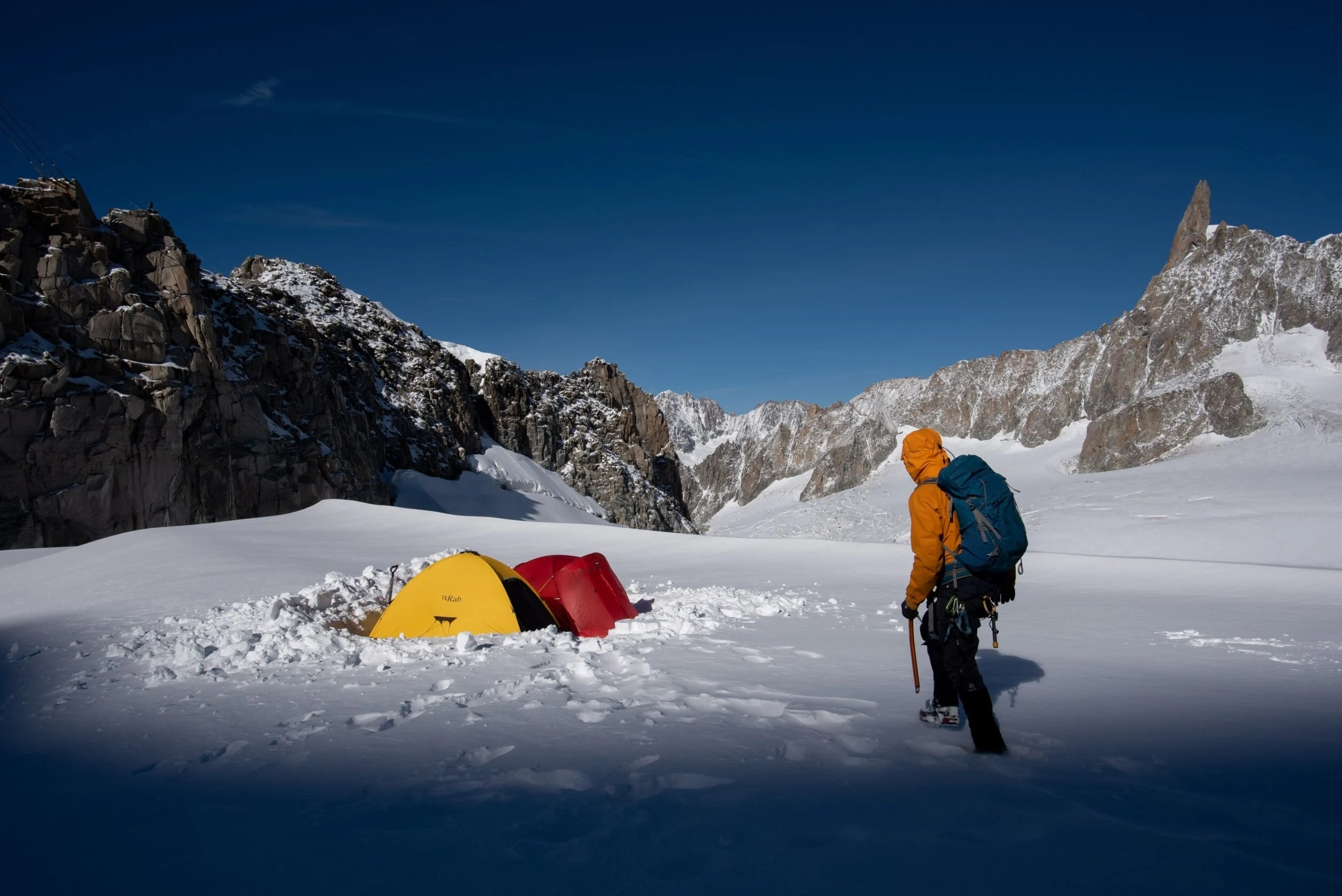
A classic mountaineering or alpine touring ice ax typically features a straight or subtly curved shaft, a gently curved pick, and a pick angle of approximately 65-70 degrees. Its primary function is self-arrest in the event of a slip and providing stable support, often replacing trekking poles on steep, challenging terrain (slopes exceeding 30 degrees). For general use, opt for a lightweight Type 1 model (around 2.5 kN resistance) with a traditional length (reaching your ankle bone when held with your arm relaxed at your side), featuring an aluminum shaft and a steel head. The presence of a broad adze is beneficial for excavating steps in snow.
Ice Axes for Ski Touring and Ski Mountaineering
An ice ax designed for ski touring or ski mountaineering prioritizes extreme lightness (under 300 g) and a shorter shaft (40-50 cm), often utilizing an aluminum adze or ultra-light alloys. The emphasis here is on providing reliable security during steep ascents and effective braking for uncontrolled falls. Since it will primarily be carried on a backpack, it must not impede movement. Instead of a wrist leash, a model with a hand rest (often called a Trigrest) is recommended, as it prevents the handle from slipping and ensures better control.
Technical Ice Axes for Ice Climbing, Dry Tooling, and Mixed Climbing
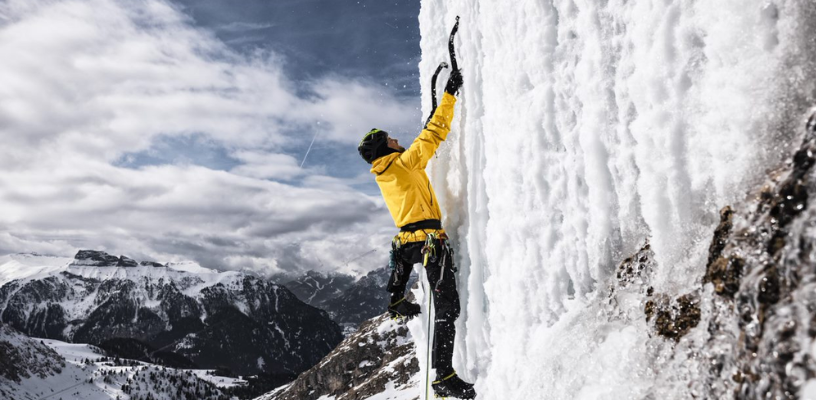
Technical ice axes, frequently referred to as “ice tools” due to their aggressive appearance, are purpose-built for specialized climbing. These Type T (or Type 2) tools are engineered to tackle frozen waterfalls, ice pitches, and rock faces covered in ice. Compared to touring axes, they are noticeably shorter, boast significantly curved shafts, and feature a highly aggressive, curved pick designed to maximize purchase on steep ice and snow. This specialized design also greatly simplifies ice removal from the pick.
Given their high-intensity use, technical ice axes often come with interchangeable picks for different conditions, such as ice or mixed terrain. Additionally, their heads typically incorporate a carabiner hole. For extremely steep, vertical, or challenging ground, opt for ice tools with an ergonomically shaped handle and a moderate to very pronounced arch. For more varied alpine terrain, a version with a slightly less aggressive curve might be preferable.
For demanding activities like ice climbing, dry tooling, or mixed climbing, climbers commonly employ two technical axes (either a hammer-and-adze set or two hammers) to adapt to varying angles and slope conditions.
The optimal length of a general mountaineering ice ax is the distance from the end of the shaft to the tip of the spike. Expressed in centimeters, this typically ranges from 50-75 cm. As a general guideline, individuals measuring 160-170 cm might prefer a 50 cm ax, those over 180 cm a 60 cm model, and individuals above 195 cm could find a 70 cm ax suitable. However, the most accurate fit is always achieved through a direct “test” in a store. To do this, you should:
- Stand upright in front of a mirror or ask for assistance, ensuring you avoid leaning, which can lead to an inaccurate measurement. The spike should reach your ankle bone when you hold the ax with your arm relaxed at your side.
What are the implications of choosing an ax that is too long? When attempting to plunge it in front of you on a steep slope, the oversized tool will feel cumbersome and awkward, leading to rapid fatigue. Furthermore, there’s an increased risk of it snagging on your backpack during movement, potentially creating hazardous situations.
Now that you understand the principles of choosing an ice ax based on length and activity type, what other factors should you consider when purchasing this critical tool for your next excursion, mountaineering trip, or ski tour?
- Weight: Lighter is generally better, particularly if you’re selecting a ski touring or technical climbing ax that will spend significant time attached to your backpack (especially on lower-angle terrain).
- Additional Accessories: Consider rubber caps for the spike, adze, and pick, or a protective bag for the entire ax. These accessories significantly enhance the safety of transport and storage, preventing damage or injuries from accidental contact with sharp components.
Selecting the correct piolet is only the first step. It’s equally vital to possess the knowledge and practical skills necessary to wield it effectively on your chosen terrain. To achieve this, enrolling in a winter skills or alpine course is highly recommended. Under expert guidance, you’ll learn essential techniques such as ice ax braking, self-arrest, belaying, anchor construction, and the proper placement of screws and pitons. Such training also typically covers fundamental navigation skills and emergency procedures, including avalanche safety (e.g., transceiver use, probe, shovel).
An ice ax and crampons are indispensable equipment for anyone venturing into challenging winter mountain environments, tackling frozen waterfalls, or exploring backcountry ski routes. When choosing your ice ax, ensure it perfectly matches your height and intended purpose; otherwise, it will not perform optimally and may compromise your safety. At Sporto.ro, you’ll discover an extensive selection of
Piolets
for ice climbing, technical mountaineering, glacier travel, and ski mountaineering from renowned brands like Black Diamond, Blue Ice, Climbing Technology, Grivel, and Salewa.