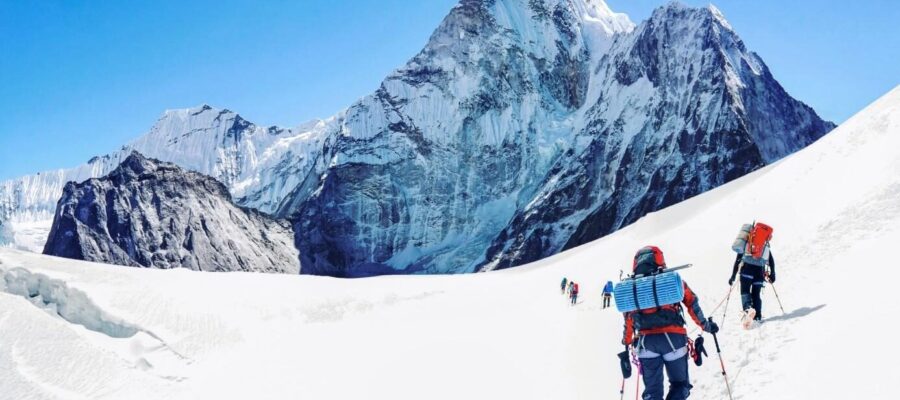
Embarking on any mountain journey, whether a relaxed family weekend, an adventurous multi-day camping trip with friends, or a challenging via ferrata, demands thorough preparation. What vital equipment, accessories, and outdoor gadgets should accompany you to fully leverage your capabilities and navigate every kilometer of your chosen path safely?
Meticulous planning for mountain routes is paramount, primarily due to the unpredictable nature of weather conditions and the potential for unforeseen circumstances (such as getting disoriented, losing mobile signal, unexpected hut closures, or reaching physical limits). A well-organized mountain expedition ensures a smooth, secure experience, allowing you to fully immerse yourself in the joys of outdoor physical activity.
Initially, the length and difficulty of your route must align with your trekking or climbing experience and physical health. When planning for a group or family, always consider the capabilities of the least experienced participant. For beginners, start with less demanding trails recommended by seasoned hikers, gradually increasing the challenge as your proficiency grows. Local guides often provide detailed route descriptions, including difficulty levels and estimated walking times. If you’re an expert climber, seek a partner with compatible goals, physical fitness, and outdoor experience. For multi-day excursions, decide if you’ll stay in mountain refuges (which may require a sleeping bag and mat) or camp in a tent (verify regulations, as wild camping is restricted in many areas, such as national parks).
A critical component of effective mountain preparation is assembling gear suitable for the season, prevailing weather conditions, and the specific terrain. Basic mountain essentials include:
During winter expeditions, seriously consider adding avalanche safety equipment to your pack: an avalanche transceiver, probe, and shovel.
Crucially, before setting out, inform family or friends of your destination, intended route, and estimated return time. While on the trail, utilize a mobile mapping application, but always carry a traditional physical map as a backup for scenarios like a dead phone battery or signal loss.
When curating your mountain kit, prioritize functional trekking apparel and specialized hiking footwear. Why should you avoid cotton clothing, denim, and shoes with inadequate soles? Cotton and denim rapidly absorb moisture and dry slowly, posing a hypothermia risk in colder conditions. Footwear with poor tread offers insufficient grip, increasing the risk of slips, ankle injuries, and instability, and lacks the durability required for rugged terrain.
Essential Trekking Footwear
Venturing into the mountains demands well-fitting and thoroughly broken-in trekking boots. Ensure the sole length of your mountain boots is 0.5-1 cm longer than your foot. Never wear a brand-new pair of boots directly on a strenuous trail; instead, wear them for shorter walks or around the house to prevent discomfort and blisters. Adjust the shaft height of your boots based on your skill level, weather expectations, and the nature of the path.
High-cut trekking boots are ideal for beginners, seasoned hikers tackling challenging terrain, those carrying heavy loads, or individuals needing extra ankle support. Conversely, low-cut trekking shoes offer reduced weight, enhanced ventilation, and allow for a quicker pace, making them excellent choices for summer hikes or less demanding trails and rolling hills. When selecting trekking boots, opt for models featuring Gore-Tex® membranes for waterproofing and breathability, and Vibram® soles for superior traction. Leading outdoor footwear brands include Colombia, Dolomite, Sportiva, Hoka, Black Diamond, Kayland, Meindl, and The North Face.
Layered Trekking Apparel
Your clothing choices should be dictated by the season, anticipated weather, and the trail’s difficulty. Adopting the “onion style” or layering system is best, allowing you to easily add or remove layers to adapt to changing conditions.
For spring, autumn, and winter conditions, consider packing:
-
A Softshell or a waterproof hard shell jacket for rain/snow, prioritizing both water resistance and breathability;
-
Trekking trousers with a membrane – for late spring or warmer autumn days, convertible pants with removable legs offer adaptability;
-
Gaiters, or fabric protectors: these shield your calves and ankles from mud, snow, or water;
-
A warm hat and a neck gaiter or multifunctional buff: choose a lightweight, breathable cap for warmer periods and insulated gloves for colder conditions;
-
High-quality hiking socks – such as those made with Merino wool for warmth, moisture-wicking, and odor resistance.
What should your summer mountain kit include? Your summer essentials typically comprise:
-
Lightweight, breathable base layers (e.g., synthetic or merino wool t-shirts);
-
Convertible trekking pants or quick-drying shorts;
-
A light fleece or mid-layer for cooler evenings or higher altitudes;
-
A waterproof and windproof shell jacket (even in summer, mountain weather can change rapidly).
An indispensable element of any mountain expedition is a well-fitting backpack. It enables efficient transport of all necessary items, keeping them organized and secure. Its capacity should be selected based on the nature and duration of your trip, the amount of gear required, and your physical condition. Common options include:
-
A trekking backpack with a capacity of 50-80 L is ideal for multi-day excursions (e.g., camping trips);
-
A climbing backpack of 40-55 liters, often featuring loops for gear like ice axes, trekking poles, and a hydration pocket.
Avoid carrying an unnecessarily large or heavy backpack. Every extra kilogram in the mountains can significantly reduce your efficiency and enjoyment. High-quality hiking, trekking, or climbing backpacks, crafted from durable materials, are available from reputable outdoor gear manufacturers such as The North Face, Colombia, Black Diamond, Thule, Deuter, or Ortovox.
Essential mountain safety equipment includes:
-
A reliable light source like a headlamp or flashlight (with spare batteries);
-
A comprehensive first aid kit (key components: bandages, sterile gauze, elastic bandage, adhesive tape, antiseptic wipes, a thermal blanket (emergency silver/gold foil blanket), small scissors, single-use gloves, pain relievers, and any personal medications);
-
An insulated travel thermos to keep drinks at the desired temperature.
Especially during summer, remember to pack UV sun protection (sunscreen, lip balm) and repellents for mosquitoes and ticks.
In winter, for more challenging routes, you will also need specialized gear such as crampons for ice and hard-packed snow, and an ice axe for stability and self-arrest.
An important, though sometimes overlooked, gadget in mountain equipment is a traditional tourist map (preferably laminated for durability) and a compass. These are crucial backups if GPS devices fail or lose signal. Furthermore, using a phone for navigation can quickly drain its battery, which might be vital for emergency communication. To mitigate this, equip yourself with a power bank capable of charging not only your phone but also a sports watch or other electronic devices.
For enhancing your mountain excursions, consider these useful gadgets:
-
An action camera to capture memorable moments (e.g., from brands like Insta360, offering 4K and 360° capabilities);
-
A dedicated tourist GPS navigator with pre-loaded hiking routes for reliable orientation, particularly in adverse weather or on unfamiliar trails (e.g., Garmin devices);
-
A smartwatch for monitoring performance metrics such as excursion time, distance covered, steps, heart rate, and calorie expenditure, often featuring an altimeter, barometer, or storm warnings (consider smartwatches from brands like Polar, Garmin, Suunto, or Wahoo).
Both in summer and winter, UV-filtering sunglasses (blocking UVA and UVB rays) are essential to protect your eyes from harmful radiation (snow reflects approximately 80% of UV light). Additionally, it’s recommended to carry a lightweight, portable seat pad (which can serve as a small chair or a backpack back panel), trekking poles for stability and support, and a versatile multi-tool or knife.