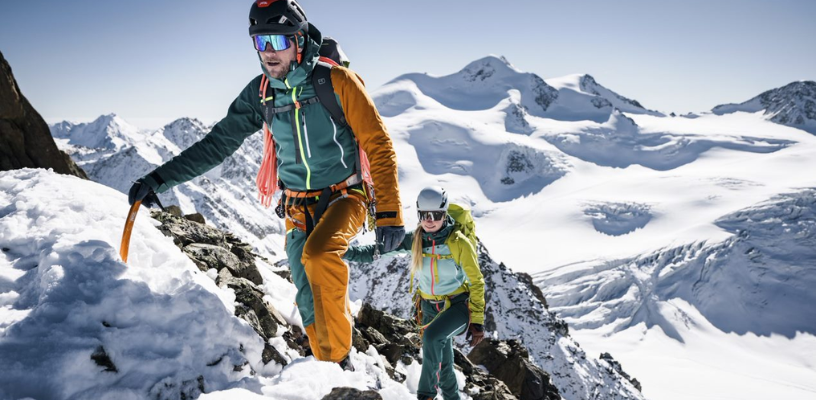
Venturing beyond marked ski slopes into the winter backcountry, whether for alpine tours, mountaineering, or ski touring, demands paramount safety. The core avalanche safety kit—comprising an avalanche transceiver, a probe, and a snow shovel—is an indispensable lifeline. This fundamental equipment empowers you to locate and rescue individuals tragically buried in an avalanche. Understanding the mechanics of each piece of avalanche gear and what to prioritize during purchase is crucial for every winter enthusiast.
The essential avalanche kit, including a transceiver, a probe, and a snow shovel, is the foundational set that every winter explorer must possess. It significantly boosts the chances of successfully assisting victims after an avalanche incident and bolstering overall safety. Furthermore, to minimize the risk of being completely engulfed by an avalanche and enhance survival odds beneath the snowpack, consider augmenting this basic kit with an avalanche airbag backpack. When deployed correctly, its airbags work by floating you towards the surface.
The Avalanche Transceiver: Your Electronic Lifeline
The avalanche transceiver is an electronic device operating on a 457 kHz radio signal, functioning in two critical modes: emission (activated at the start of any backcountry excursion) and reception (engaged once the avalanche settles, enabling the precise location of a buried victim). Complementing this, the avalanche probe, resembling a collapsible pole, is vital for meticulously pinpointing a buried individual’s exact position. The final piece of the essential avalanche trinity is the snow shovel, designed for swift and efficient snow removal to uncover victims. It’s crucial to remember that only a complete avalanche kit significantly improves the likelihood of a successful rescue operation.
Following an avalanche, every second counts. How quickly must a rescue operation commence to maximize the chances of saving someone engulfed by the snow? The initial 15-18 minutes are the most critical. Often, professional rescuers require more time to reach accident sites, especially without helicopter access. Therefore, it is paramount for those closest to the avalanche site—companions or fellow adventurers—to initiate immediate action to save buried individuals. Time and knowledge are key, but the right equipment is equally vital. The avalanche kit empowers rescuers to:
- Rapidly identify and initiate life-saving rescue efforts for a buried person.
- Determine the victim’s precise location and depth beneath the snow.
- Optimize and accelerate the excavation process in challenging avalanche debris.
A digital avalanche transceiver continuously transmits a radio signal in send mode. In search mode (reception), it detects signals from other transceivers, guiding the rescuer with visual and auditory cues indicating distance and direction to the victim. For optimal safety, wear your transceiver in its protective harness (e.g., neoprene pouch) suspended around your chest, beneath your outer clothing.
When selecting a transceiver, consider features such as: the number of antennas (models with at least three antennas are recommended for superior signal stability and accuracy), water resistance, a large backlit display for visibility in poor conditions, robust, impact-resistant housing, and user-friendliness, even when wearing gloves. A marking function, allowing you to flag already-found signals when searching for multiple victims, is highly beneficial. Always perform a pre-trip check to ensure your transceiver is transmitting and detectable by your group’s equipment.
The Avalanche Probe: Precision in Location
The avalanche probe is a graduated stick (often with colored segments) invaluable for precisely determining a buried person’s exact location and depth, thereby increasing survival chances. Opt for models crafted from durable yet lightweight materials like aluminum or carbon fiber, equipped with a robust internal cord, such as Kevlar or steel. It should feature a rapid deployment system (e.g., quick-lock) and be at least 240 cm long (professionals often use 320 cm models). Look for a strengthened tip for easier penetration, a hand strap for secure handling, and efficient operation while wearing gloves.
The Avalanche Shovel: Your Excavation Tool
An effective avalanche shovel should feature a blade measuring approximately 28 × 25 cm, be lightweight, and have a rigid, torsion-resistant blade (e.g., hot-forged and anodized aluminum). An optimal design includes high sides and a flat top edge on the shovel blade, often coated with non-slip material, to prevent boots from slipping during excavation. This design facilitates efficient clearing and cutting of snow blocks. A telescopic handle is a practical feature, allowing length adjustment for varied needs and simplifying storage and transport. Some models also offer an attachment option to your backpack to conserve space. Pay attention to the handle shape: T-shaped (preferably with a quick-switch function for left/right-handers) or D-shaped handles with a non-slip grip ensure secure handling.
An avalanche airbag backpack can significantly reduce the risk of complete burial during a slide. By inflating, it helps keep your body near the surface of the snow, potentially preventing you from being dragged under and protecting you from rocks or other debris. Activation typically involves pulling a dedicated handle at the critical moment. Brands like Ortovox, for instance, utilize pressure systems (e.g., JetForce) that inflate an air cushion using a fan, while other systems rely on compressed gas cylinders.
It’s vital to understand that possessing and deploying an avalanche airbag backpack does not guarantee absolute safety or an unharmed recovery. Proper training on its use is equally important to avoid potential injuries, such as those caused by sudden stops within snow masses or entanglement with ski/snowboard equipment.
Crucially, even the most advanced equipment is rendered ineffective without proper safety training and practiced avalanche rescue techniques. Make it a priority to participate in a winter tourism course or an avalanche awareness and safety course. These courses will teach you, among other things, how to effectively use your avalanche kit and cover essential aspects of mountain avalanches (their formation, prevention, behavior on avalanche terrain, snowpack types, etc.). Such training is instrumental in equipping you with the right knowledge and preparing you for emergencies.
Regular practice with your equipment is also essential for honing your skills. Organize simulated rescue scenarios with friends, such as burying a backpack, detecting it with a transceiver, then carefully probing the area, and finally excavating with a shovel. This hands-on practice builds confidence and efficiency.
You can find high-quality, proven avalanche kits from respected manufacturers such as Ortovox, Pieps, Salewa, and Black Diamond at Sporto.ro, ensuring you are equipped with reliable gear for your winter mountain adventures.