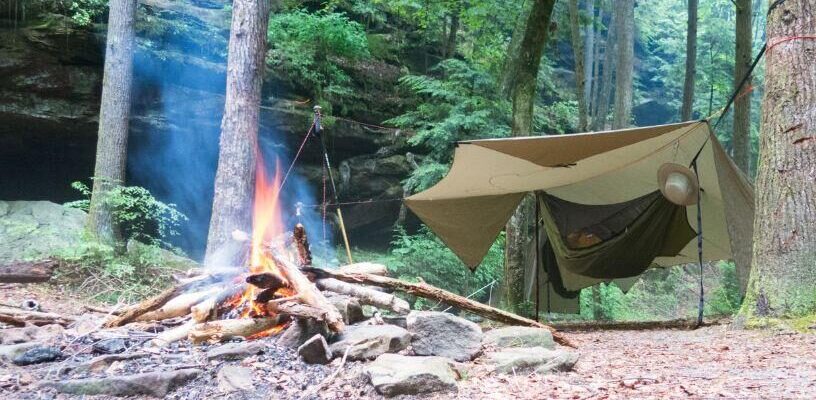
In a world increasingly dominated by technology, a deep-seated urge often arises to reconnect with our primal roots. We seek respite from digital screens, wishing to silence our phones, disconnect from constant news feeds, and immerse ourselves in untamed natural environments. This desire to embrace raw wilderness, unburdened by apps, internet access, or even basic electronic gadgets, perfectly encapsulates the spirit of Bushcraft. But what exactly is Bushcraft? How does one begin this journey, and what essential tools will you need? This comprehensive guide will explore these fundamental questions.
The term “Bushcraft” is a fusion of two words: “Bush,” signifying the wild or untamed outdoors, and “Craft,” denoting skill or artistry. Together, they describe the refined art of thriving and surviving in natural settings. Yet, Bushcraft embodies a philosophy far more profound than simply roughing it for a weekend. It transcends a temporary escape from modern conveniences or a brief challenge before returning to urban life. Instead, it fosters a dedicated, enduring bond between humans and the wilderness. True practitioners of bushcraft frequently venture into forests, continuously refining their outdoor skills and expanding their repertoire of practical abilities. It represents a perpetual pursuit of knowledge, teaching practices that might seem obsolete in contemporary society but are, in essence, critical for self-reliance and survival in truly isolated environments.
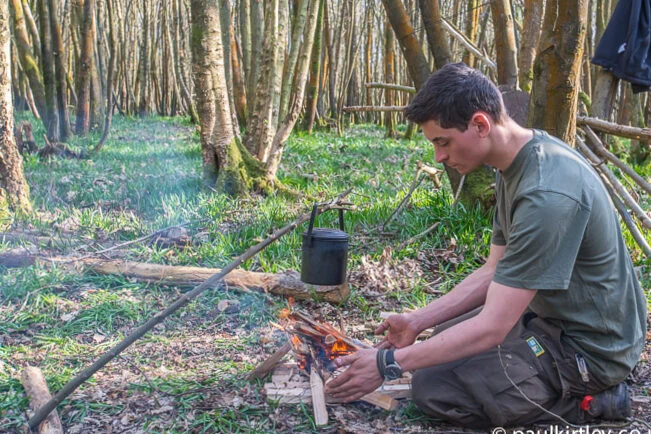
At its core, Bushcraft advocates for a profound coexistence with nature, emphasizing both the responsible utilization of its resources and a deep reverence for the environment, aligning with contemporary ecological principles. This practice actively nurtures qualities such as self-sufficiency, a minimalist approach to living, the sustainable harvesting of natural materials, and hands-on learning from the natural world. Many of the ethical tenets inherent in bushcraft resonate strongly with the widely recognized “Leave No Trace” principles, ensuring minimal human impact.
It’s worth noting that while “Bushcraft” has firmly established itself in the lexicon of outdoor pursuits, it wasn’t the sole term initially proposed for such activities. Prior to its widespread adoption, the term “Woodcraft” was sometimes used, though it never gained the same lasting traction in common usage or dictionaries.
The individual largely credited with popularizing modern Bushcraft is Mors Kochanski, a Canadian of Polish descent. Growing up on a Saskatchewan farm, he developed an early and intense fascination with the natural world. As the son of a carpenter, he was also exposed to the meticulous work of a skilled artisan. In his adult years, he masterfully fused these two formative influences.
Kochanski, whose unusual first name was reportedly a clerical error on his birth certificate, initially pursued his wilderness passion through scouting. However, he soon found the institution somewhat limiting, as his profound naturalistic inclinations weren’t fully embraced. Undeterred, Kochanski embarked on a self-directed journey of expanding his knowledge. He first qualified as a seaman, then pursued academic studies in anthropology, psychology, geology, and writing. His diverse career path included roles as a cement production technician, designer, and social worker. He even earned a pilot’s license, showcasing his multifaceted talents and drive.
By 1968, Mors Kochanski started conducting courses dedicated to teaching survival skills in the Canadian wilderness, frequently integrating techniques derived from indigenous communities. The field’s recognition significantly advanced two decades later with the release of his seminal book, “Northern Bushcraft.” This publication quickly achieved bestseller status, profoundly influencing and popularizing this distinctive form of outdoor living.
The 1990s witnessed a dramatic surge in Bushcraft’s appeal, fueled in part by a BBC television series hosted by another pivotal figure in the bushcraft movement, Ray Mears. Today, it continues to serve as an unparalleled escape from the demands of modern existence – a vital pause from urban environments and the pervasive influence of technology.
Exploring the Diverse Facets: Four Main Types of Bushcraft
- Philosophical Bushcraft – This branch emphasizes leisurely recreational activities, often focusing on spiritual enrichment, deep contemplation of nature, and fostering a profound connection with the wilderness.
- Practical Bushcraft – Also known as “Survival Bushcraft,” this type is intensely focused on acquiring and applying wilderness survival skills within a forest setting. It entails mastering various methods, utilizing all available resources, and employing practical tools to thrive in challenging environments. This trend bears significant resemblance to the broader field of pure survivalism.
- Primitive Bushcraft – An immersive approach where practitioners commit to using only the most basic, self-made tools and ancient survival techniques, often eschewing modern conveniences entirely.
- Reconstructive Bushcraft – Considered a more adaptable variation of primitive bushcraft, this style allows enthusiasts to incorporate some contemporary survival gear when circumstances demand, while still striving for traditional methods.
While Bushcraft is a distinct form of outdoor engagement with wild nature, it shares some common ground with “Survival” techniques. For a period, these terms were often used interchangeably, despite not being true synonyms. What, then, distinguishes them? Bushcraft represents an overarching philosophy and a way of life where practitioners’ existence is intrinsically linked to the wilderness. They continually seek opportunities to commune with nature, enhancing their capacity to live harmoniously within challenging natural environments.
In contrast, survival training also imparts invaluable skills for enduring in remote, uncivilized areas. Nevertheless, these skills primarily serve as a means to a specific, often short-term objective – escaping a perilous situation – rather than embodying an inherent lifestyle value. Survivalists aim to be fully equipped for the harshest possible scenarios, intending to navigate extreme circumstances and reintegrate into their regular lives as swiftly as possible. They do not typically view wilderness living as a permanent condition or a deliberate lifestyle choice. For them, every action is geared towards the efficient accomplishment of specific tasks, with resourcefulness being key but personal connection to nature often secondary to immediate necessity.
Furthermore, Bushcraft inherently places a stronger emphasis on ecological stewardship and responsible interaction with the environment. Equipment choices also tend to differ. Survivalists typically embrace minimalism, restricting their gear to the absolute essentials required for immediate crisis management. Bushcraft practitioners, however, often aim to establish a more comfortable and functional existence in the wild, which can lead them to carry a broader array of tools and supplies.
Bushcraft is not an endeavor to be undertaken impulsively or without preparation. It demands the acquisition of specific wilderness skills and the careful collection of essential equipment before venturing into its unique challenges. So, where does one begin? An excellent starting point is to delve into comprehensive guides and watch instructional videos produced by seasoned bushcraft experts on platforms like YouTube.
For your initial bushcraft excursions, it is highly advisable to join a larger group or participate under the guidance of professional instructors. There will be ample opportunity for solo wilderness adventures once you’ve built a solid foundation of experience and expertise.
When preparing for any outdoor activity, including bushcraft, adhering to the widely recognized “layering principle” – often likened to dressing like an onion – is crucial for comfort and safety. The foundational layer should always be
thermoactive base layer
which removes humidity from the skin. Subsequently, depending on the weather conditions and your personal requirements, you can add a
trekking mid-layer
(such as fleece) and appropriate wilderness pants. The outermost layer is vital for providing direct protection against the elements. For windy conditions, robust, wind-resistant outerwear is generally adequate (e.g., a sturdy
jacket
and
trousers
). However, when anticipating rain, investing in clothing featuring a waterproof, breathable membrane is highly recommended.
What differentiates bushcraft attire from general tourist wear? A key distinguishing feature is often the color palette. Dominant shades tend to be those associated with military or forestry services – various natural greens, browns, and earth tones designed to blend seamlessly into the natural environment. Beyond aesthetics, bushcraft clothing prioritizes garments crafted from highly durable and quick-drying materials, built to withstand rugged conditions.
Essential Footwear for Wilderness Adventures
When embarking on a wilderness excursion, it’s crucial to invest in high-quality boots, such as those designed for
trekking
. Select a model featuring a tenacious sole and a durable, protective upper. Bear in mind that in bushcraft environments, your feet will be exposed not just to rain, but also to persistent dew. To enhance your defense against moisture, opt for footwear equipped with a waterproof, breathable membrane (like Gore-Tex®).
What gear should you prioritize when preparing for your first bushcraft adventure? It’s paramount to seek out equipment that is both highly practical and exceptionally durable. A bonus is if the gear is also lightweight, easing the burden of transport. Given that every wilderness trip is unique, your equipment selection should always align with your individual skills, specific needs, and the expected conditions. Instead of an exhaustive A-Z inventory, here are some pragmatic recommendations to get you started.
No bushcraft expedition is truly complete without a reliable backpack. Both military-inspired designs and dedicated
trekking backpacks
are well-suited for this purpose. Crucially, select a capacity that comfortably accommodates your essential gear without forcing you to overpack or carry unnecessary bulk. Ensure the pack features an ergonomic carrying system, robust zippers, and external attachment points for additional items. A built-in rain cover is a highly valuable accessory. It’s also worth noting that many manufacturers now offer gender-specific designs, with specialized
men’s backpacks
and
women’s backpacks
tailored for optimal fit and comfort.
For your bushcraft activities, a reliable shelter is indispensable. If you’re still developing the advanced skills to construct a secure natural bivouac from found woodland materials, then packing a lightweight
trekking tent
or a versatile minimalist tarp in your backpack is a prudent choice. This ensures you’ll always have guaranteed overhead protection from the elements.
Ensuring Restful Nights: Sleep Systems for the Wild
If you’ve opted for a
tent
or tarp, your comfort will be greatly enhanced by a proper sleeping system. This can be a simple
sleeping mat, self-inflating pad, or an inflatable mattress
. If you’re using a tarp, a comfortable alternative is to string up a
hammock
. For thermal regulation and warmth, a reliable
sleeping bag
is essential. Down-filled models are prized for their lightness and superior insulation, but they perform poorly in damp conditions, losing their insulating properties when wet. Therefore, if your trip anticipates significant rainfall or high humidity, a sleeping bag with synthetic insulation would be a more resilient choice.
A high-quality knife is an utterly indispensable tool for any bushcraft enthusiast. A robust wilderness knife offers a multitude of applications, from food preparation to crafting and shelter building. For added versatility, consider bringing a
multi-tool
, which provides an array of supplementary instruments in a compact form.
A well-managed campfire serves multiple crucial purposes in the wild: it provides warmth, allows for cooking comforting meals, and acts as a deterrent against curious wildlife. If you’re still developing mastery over primitive fire-starting techniques, always carry a dependable lighter or fire steel to ensure you can ignite a blaze reliably.
While bushcraft often means detaching from modern conveniences, it’s highly practical to include at least one modest
pot or canteen cup
for boiling water or preparing simple meals. And, of course, don’t overlook a compact set of travel cutlery.
Navigating the Darkness: Essential Lighting
Many bushcraft practitioners strive to minimize reliance on electronics, but a quality
headlamp
is a notable exception worth making. An independent light source is a fundamental safety provision in the wilderness. If you opt to carry a headlamp, remember to pack spare batteries or a portable power bank to ensure sustained illumination.
A responsible bushcraft practitioner meticulously ensures they leave minimal impact on the environment. For managing human waste or burying fire embers, a compact shovel (such as an
easily foldable field trowel
) is an invaluable tool for adhering to “Leave No Trace” principles.
While seasoned bushcraft experts might forego an axe or saw, there’s no denying these tools significantly ease the workload in the wild. With such equipment, you can efficiently process wood, making a substantial “contribution” to building a faster, more effective campfire.
Few things are more disheartening than discovering all your spare clothes are soaked after an unexpected downpour. While waterproof dry bags might seem like a luxury to an experienced woodsman, for those embarking on their bushcraft journey, these accessories are undeniably valuable for protecting essential gear.
Prioritizing Safety: The Essential First Aid Kit
Even though seasoned bushcraft practitioners often possess extensive knowledge of natural remedies and field medicine, carrying a comprehensive
first aid kit
, stocked to mountain rescue standards, is always a prudent and potentially life-saving precaution.
Bushcraft is a rapidly expanding field of outdoor activity, continually gaining enthusiasts worldwide. If you’re eager to embark on this rewarding pursuit, prioritize acquiring equipment that offers both reliable comfort and, critically, ensures your safety. You can find a comprehensive range of bushcraft-specific clothing, footwear, and gear at Sportano.ro. Their selection features top outdoor brands such as: Salewa, Columbia, Jack Wolfskin, Black Diamond, The North Face, Deuter, Gregory, Campingaz, Easy Camp, and Lifesystems.