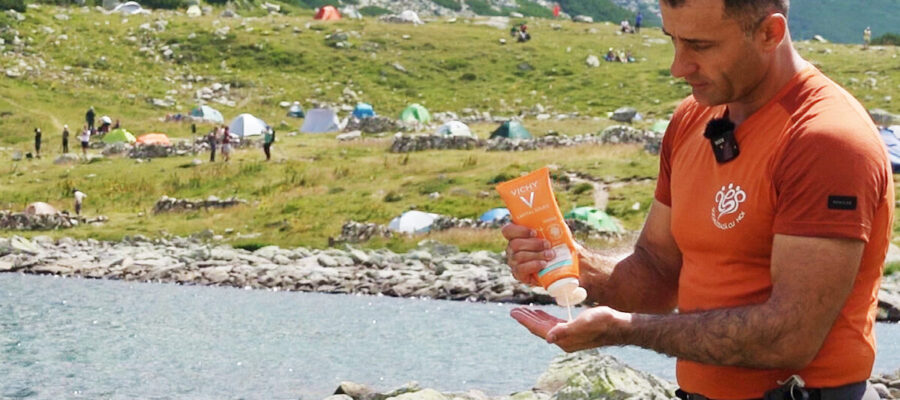
Hello fellow adventurers! Sorin here, bringing you another insightful article designed to enhance your outdoor experiences.
This piece serves as a comprehensive companion to a video I previously created on sunscreen use during mountain excursions. If you haven’t had a chance to watch it yet, I encourage you to do so to complement the information presented here. This article delves deeper, offering additional details to solidify your understanding of sun protection.
Introduction
The arrival of warmer weather consistently draws an increasing number of individuals to the mountains. It’s truly encouraging to witness more people choosing to escape urban environments, step away from comfortable accommodations or simply relax by their vehicles, and instead embark on challenging trails.
Naturally, this influx of new enthusiasts into the mountain environment also presents certain challenges. A significant portion of these newcomers may not be fully aware of how to navigate or “utilize” the mountain safely and responsibly.
I frequently observe hikers who are:
- Unprepared with essential gear, or
- Equipped but unsure how to properly use their gear, or
- Possessing the right equipment but employing it incorrectly.
Many are also largely unaware of the inherent risks and potential problems they might encounter.
Upon reflection, this situation is somewhat understandable. Newcomers are just beginning their journey, and it falls upon those of us with more experience in the outdoor community to offer guidance and support.
This understanding motivated me to launch the educational video series titled: “Anyone Can Hike the Mountains. Yes, Even You!”
This article, part of that broader educational initiative, aims to equip aspiring mountaineers with the knowledge to safely and enjoyably explore the high country.
The Critical Need for Sun Protection
Understanding the consequences of inadequate sun protection is paramount, both with and without the use of sunscreens or other preventive measures.
In the short term, exposure can lead to painful and highly unpleasant sunburns, though these are typically temporary.
However, the long-term implications are far more severe, including the increased risk of developing skin cancer.
Given the gravity implied by the term “cancer,” this long-term risk stands as the primary and most compelling reason for diligently protecting ourselves from the sun.
Understanding Solar Radiation
The sun emits three distinct types of ultraviolet (UV) radiation:
- **UVA Radiation:** These rays are primarily responsible for premature skin aging and contribute significantly to the risk of skin cancer.
- **UVB Radiation:** These are the main culprits behind sunburns and also play a role in skin cancer development.
- **UVC Radiation:** Fortunately, these are largely filtered out by the Earth’s ozone layer and generally do not pose a direct threat to us.
Choosing Your Sunscreen
Applying sunscreen or other forms of sun protection is an absolute necessity for any mountain excursion.
Sunscreen products prominently display an SPF (Sun Protection Factor) indicator.
This SPF value primarily measures how effectively the cream shields your skin from **UVB radiation** – the type that causes sunburns.
It’s crucial to remember: SPF specifically addresses UVB protection, not UVA rays, which are implicated in skin cancer.
How to Ensure UVA Protection
To safeguard against UVA radiation, always opt for sun protection products labeled as “broad-spectrum” or explicitly stating “UVA + UVB protection.”
Creams with this specification offer protection against both UVA and UVB radiation, typically to a comparable degree.
Does a Higher SPF Guarantee Significantly Better Protection?
The answer is both yes and no.
While a higher SPF does offer more protection, the incremental benefits diminish significantly past a certain point.
Consider these examples:
SPF 15 blocks approximately 93% of UVB radiation.
SPF 30 blocks approximately 97% of UVB radiation.
SPF 50 blocks approximately 98% of UVB radiation.
SPF 100 blocks approximately 99% of UVB radiation.
Therefore, my recommendation is to use a protective factor of at least 30. More importantly, focus on proper and thorough application, as even the highest SPF won’t perform effectively if not applied correctly.
Duration of Sunscreen Effectiveness
When applied correctly and generously, sunscreen typically provides effective protection for about one and a half to two hours.
This duration can be considerably shorter if you’re sweating profusely or if the sunscreen is of questionable quality.
Personal Application Techniques
As demonstrated in the accompanying video, I advocate for applying a generous amount of sunscreen. This approach aligns with the recommendations of most dermatology experts.
I typically apply it at the start of the day and then reapply it during meal breaks or other rest periods throughout my hike.
Specialists generally advise reapplication every two hours for optimal protection.
Clothing vs. Sunscreen: Which Offers Better Protection?
Clothing generally provides superior protection from solar radiation compared to sunscreen. This is particularly true for densely woven fabrics or garments with a specified UPF (Ultraviolet Protection Factor) rating, which is equivalent to SPF for fabrics.
It’s also worth noting that darker colored clothing tends to offer better UV protection than lighter colors, even though lighter colors may feel cooler by absorbing less heat.
My advice is to cover as much skin as possible with protective clothing, and then apply sunscreen generously to any exposed areas.
For most individuals, any type of closely woven fabric will effectively filter out the majority of harmful sun radiation.
However, if you have very sensitive skin (meaning you burn much more quickly than others), I highly recommend seeking out clothing with a minimum UPF rating of 30.
The Most Common Sun Protection Error
The most frequent mistake I’ve observed among individuals using sun protection in the mountains is inadequate application.
Often, this stems from a desire to fully immerse oneself in nature without the perceived hassle of constant reapplication.
While this sentiment is understandable, as previously mentioned, the risks associated with improper sunscreen use are substantial.
Applying sunscreen correctly typically requires dedicating a minimum of 5-7 minutes every two hours. When hiking alone, it’s easy to neglect this crucial step; sometimes, laziness can indeed be a powerful factor, and I’ve certainly found myself in this situation.
It’s also important to remember that sunscreen does not provide immediate protection; it begins to become effective approximately 20-30 minutes after application.
Combining Sunscreen with Insect Repellent
If you plan to use both sunscreen and insect repellent, always apply the sunscreen first. Allow it to fully absorb and dry on your skin before applying the insect repellent.
What to Do If Sunscreen Enters Your Eyes
Should sunscreen accidentally get into your eyes, rinse them thoroughly with plenty of clean water immediately.
Protecting Your Lips
Lip balm is essential for mountain trips as it:
- Protects against sunburn.
- Prevents dehydration of the lips.
- Shields against chapping caused by wind exposure.
I advise you to choose a lip balm with a minimum SPF of 30 and reapply it every two hours, mirroring your sunscreen application routine.
Additionally, reapply after eating or drinking, as it can easily wear off the lips.
Sun Protection on Cloudy Days: Is It Necessary?
Overcast skies can misleadingly suggest that we are safe from the sun’s rays.
This is not true. Clouds do not effectively filter ultraviolet radiation. UV rays penetrate clouds with similar intensity whether the sky is clear or cloudy.
Therefore, yes, you absolutely need to use sun protection even on cloudy days.
Do We Need Sunscreen in Cold Weather?
YES. The impact of ultraviolet radiation is completely unrelated to air temperature.
The sun warms us through infrared radiation, which is distinct from ultraviolet radiation. UV rays are not linked to heat.
So, even if it’s cold outside, your skin can still be damaged and burned by UV rays. Apply sunscreen regardless of temperature.
Recommended Sun Protection Products
As outlined above, I recommend a sunscreen product that meets the following criteria:
- A minimum SPF of 30.
- Water-resistant, which is crucial for enduring sweat during hikes and general heat.
- Broad-spectrum, meaning it explicitly protects against both UVA and UVB rays.
- Sun Protection Cream AlphaNova Bio 50+
2. Sun Protection Cream 200 ml Active IP 50
3. Sunti spray for sun protection 150 ml FPS50+
Affiliate Disclosure
Please note: If you click on any of the product links above, which direct you to the Decathlon website, and subsequently make a purchase – whether it’s sunscreen or any other item – I may receive a small commission from the purchase price.
Your support through these links helps sustain the “Socialize With Us” project, allowing me to continue creating valuable content.
Conclusion
I sincerely hope that the information presented in this article has equipped you, my friends, with a better understanding of how to effectively protect yourselves from the sun while enjoying the mountains.
If you have any questions, please feel free to leave them in the comments section below.
If you wish to share your personal experiences with the community, I invite you to do so in the comments as well.
May your trails be safe and bright,
Sorin Rianta
Mountain Guide and Ski Instructor