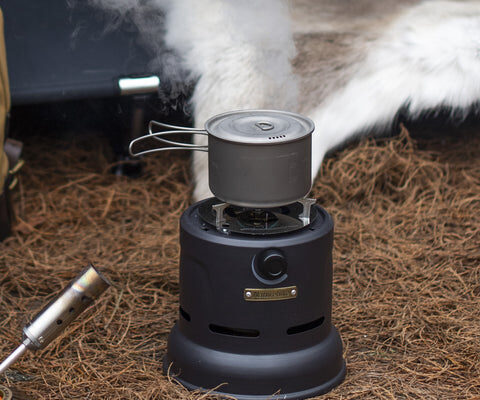
A reliable camping stove is an indispensable piece of gear for any outdoor enthusiast. Its primary function extends beyond simply boiling water; it’s crucial for preparing meals, purifying water, and even providing warmth, all of which are vital for health and safety in the wilderness. During certain seasons, significant temperature fluctuations between day and night make effective heating a priority. Furthermore, improper combustion of carbon-based fuels like wood, oil, or alcohol can pose a risk of carbon monoxide poisoning. Therefore, selecting the right camping stove is a decision that significantly impacts the comfort and safety of your trip.
The market offers a diverse range of camping stoves, broadly categorized by their fuel type. These include wood-burning stoves, gas stoves (often referred to as canister or liquid gas stoves), alcohol stoves, liquid fuel stoves (like petrol or kerosene), and hybrid models. When considering your options, a general preference for efficiency and ease of use often places gas stoves at the top, followed by liquid fuel (petrol/oil) stoves, with others like wood, alcohol, and kerosene stoves serving more specialized niches. Your ultimate choice should always align with your specific needs and the environmental conditions you expect to encounter.
- Gas Stoves
- Alcohol Stoves
- Liquid Fuel Stoves (e.g., Petrol/Gasoline)
- Wood Stoves
- Kerosene Stoves
Gas Stoves: The Popular Choice
Gas stoves are among the most popular options for campers due to their convenience and ease of use. They generally come in a few common configurations:
- Split Canister Stoves
- Integrated Canister Stoves
- Cassette Stoves (often for car camping)
Split Canister Stoves
These compact gas stoves are known for their robust heat output and enhanced safety features. Characterized by a separate fuel line connecting the burner head to the gas canister, they significantly reduce the risk of the canister overheating. This design allows for a stable cooking platform, making them a common sight in various outdoor settings, capable of handling diverse culinary tasks.
Split canister stoves are particularly well-suited for group camping, providing ample cooking capacity for multiple individuals.
ADVANTAGES: Excellent stability and a wide base for larger pots.
DISADVANTAGES: Can be bulkier and less convenient to pack and transport compared to other types.
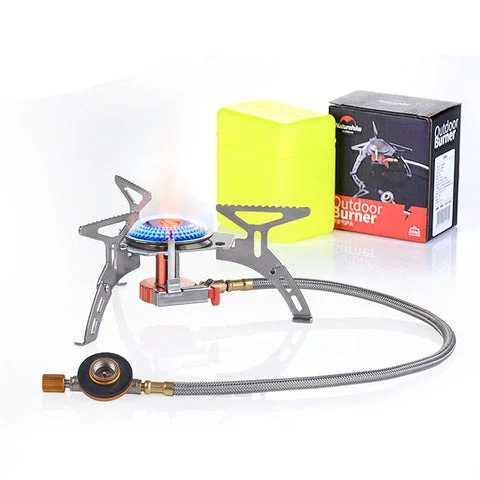
Safety Tip: Always ensure the gas canister is securely attached to the stove’s fuel line. Position the canister on a flat, stable surface during operation to prevent an unstable or weak flame, which could pose a safety hazard.
Integrated Canister Stoves
Integrated gas stoves feature a burner head that screws directly onto the top of the gas canister, eliminating the need for a separate fuel hose. This design results in a significantly lighter and more compact unit, with most models weighing between 60-200 grams.
ADVANTAGES: Exceptional lightweight design, minimal packed size, and superior portability.
DISADVANTAGES: Can suffer from lower stability, especially with larger pots, and often has limited wind resistance, requiring careful placement or a wind shield.
Integrated stoves are ideal for solo backpackers or pairs (1-2 people) due to their compact nature. Given their smaller burner head, they are best suited for smaller pots and simple meal preparations. Awareness of wind conditions is crucial during use. For avid trekkers, it can also serve as an excellent lightweight backup stove.
Specialized integrated systems, often referred to as “all-in-one” or “reactor” stoves, are engineered for extreme high-altitude and cold-weather performance. These systems excel at rapidly boiling water and cooking in harsh environments where speed and efficiency are paramount. Unless you frequently venture into such demanding conditions, a standard integrated stove will suffice for most camping needs.
Cassette Stoves
Cassette stoves, often recognized by their rectangular form factor, are generally larger and primarily designed for car camping, picnics, or home use. While they were once common in many restaurants, safety concerns have led to their gradual replacement by induction cooktops in commercial settings.
A critical component within these stoves is the pressure adjustment valve, which can experience wear and tear over time with repeated use. This degradation can potentially compromise safety.
Given these considerations, while convenient for certain applications, cassette stoves do carry some inherent safety risks. It is strongly recommended to invest in a reputable brand to ensure better build quality and safety standards.
Alcohol stoves, though not typically the first choice for primary cooking, excel in simplicity and compactness. They are best suited for tasks requiring low, sustained heat, such as boiling water, simmering noodles, preparing oatmeal, or light frying. While lightweight and economical, they come with several limitations, making them better suited as a supplementary or emergency stove.
Choosing an Alcohol Stove
When selecting an alcohol stove, opt for models with a compact, thin-walled burn chamber that promotes efficient heat transfer. For fuel, solid alcohol is often recommended as it offers more controlled combustion and is less prone to spillage or difficult extinguishment compared to liquid alcohol. However, many stoves are designed to efficiently use liquid denatured alcohol.
The key advantages of alcohol stoves lie in their affordability, simplicity, and minimal weight, making them incredibly easy to transport. A primary drawback, however, is their poor wind resistance. Seek out designs that are highly stackable and take up minimal space in your pack.
Using Alcohol Stoves Effectively
Alcohol stoves are characterized by their slower cooking times, operating with a gentle, long-duration flame and lower heat output compared to gas or liquid fuel stoves. This means they heat slowest among the common types.
They are ideal for short, minimalist trips where weight is a major concern and a low-budget, less demanding cooking solution is acceptable.
Important Note: Alcohol stoves perform best at lower altitudes; their efficiency significantly drops in high-altitude, cold environments.
Liquid Fuel Stoves (Petrol/White Gas)
When referring to “petrol” stoves in an outdoor context, the primary fuel is typically white gas (also known as Coleman fuel or naphtha). White gas is a highly volatile, clean-burning, and virtually odorless fuel with a low ignition point. It’s a favored choice for mountaineering and cold-weather expeditions, particularly in North America, due to its ability to generate significantly higher heat output compared to butane/propane mixes. This makes it exceptionally effective for rapidly melting snow, boiling water, and cooking in frigid conditions.
Unlike some other liquid fuels, white gas readily preheats itself within the stove’s generator. It’s crucial to understand that only refined white gas or other fuels specifically approved for your stove (like kerosene or diesel for multi-fuel models) should be used. Never use automotive gasoline (leaded or unleaded) in a white gas stove, as it contains additives that will quickly clog the fuel lines, damage components, and produce toxic fumes.
Liquid fuel stoves are also available in two main configurations: integrated (where the pump and fuel bottle are one unit with the burner) and remote/split (where the burner head is separate from the fuel bottle, connected by a hose).
Advantages of Liquid Fuel Stoves
- Fuel Versatility: Can often burn a variety of fuels like white gas, kerosene, and even diesel (depending on the model), making fuel acquisition easier in remote areas worldwide.
- High Performance: Excellent heat output, especially in cold weather and at high altitudes.
- Cost-Effective Fuel: Liquid fuel can be more economical per liter than gas canisters over time.
- Reliability: Known for robust construction and performance in challenging conditions.
Disadvantages of Liquid Fuel Stoves
- Complex Operation: Requires pre-heating before use, where the fuel is vaporized, which can be tricky for beginners.
- Maintenance Needs: Demands regular cleaning and maintenance to prevent the burner jets from clogging, a common issue after just a few uses if not properly cared for.
- Soot & Smell: Can produce more soot and a slight odor compared to gas stoves.
- Weight: Often heavier than equivalent gas canister stoves.
Wood-Burning Stoves
Advantages of Wood Stoves
- Free Fuel: Offers the most primitive and connection-to-nature cooking experience. Where permissible, you can gather fallen twigs, branches, and other biomass, eliminating the need to carry fuel.
- Versatility: Many modern wood stoves are designed to be multi-fuel capable, allowing them to burn wood, solid fuel tablets, or even small charcoal briquettes.
- Sustainability: Utilizing readily available biomass can reduce your environmental footprint by avoiding fossil fuels.
Disadvantages of Wood Stoves
- Weight & Bulk: While some are lightweight, many capable wood stoves with folding components can still be heavier and bulkier than other stove types, sometimes necessitating vehicle transport.
- Weather Dependent: Finding dry wood can be challenging or impossible in wet, rainy, or snowy conditions, requiring you to carry alternative fuel or risk not being able to cook.
- Smoke & Soot: Can produce significant smoke and soot, which can blacken pots and leave a lingering smell.
- Leave No Trace: Requires careful management of ash and ensuring complete combustion to minimize environmental impact.
Kerosene Stoves
Kerosene stoves, often originating from Japanese manufacturers, are categorized by their heating mechanisms. These typically include basic convection models, convection units with thermal radiation and reflectors, and forced-air designs. While many basic convection kerosene stoves operate without electricity, some advanced models incorporate batteries or even require an external power source for features like igniters or fans.
Selecting a Kerosene Stove
A significant reason to opt for a kerosene stove is its dual functionality: efficient heating within a tent or shelter, in addition to outdoor cooking. When considering one for indoor heating, the intensity of the kerosene odor is paramount. While a slight smell is common during ignition and extinguishing, a quality stove should stabilize after roughly 10 minutes of operation, with the odor becoming less noticeable. If a strong, persistent kerosene smell lingers, it’s advisable to avoid that model, as it could compromise your comfort and sleep.
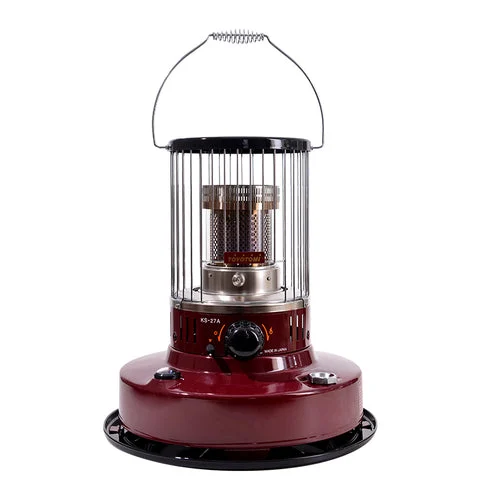
Kerosene stoves generally do not require an exhaust flue (like a chimney) and their primary advantage is the ability to provide substantial heat within an enclosed space like a large tent, while also serving cooking needs. Kerosene typically burns more completely than wood, resulting in less carbon monoxide production. However, it is absolutely essential to ensure adequate ventilation when using any combustion device inside a tent to prevent carbon monoxide poisoning. Many Japanese-made kerosene stoves incorporate an automatic flame-extinguishing feature activated by vibrations, such as from earthquakes, bumps, tipping, or strong impacts, adding a crucial layer of safety. This mechanical safety device operates independently of an electrical power supply.

A common characteristic of kerosene stoves is a noticeable odor during ignition and when the flame is extinguished. The smell tends to diminish once the stove reaches operating temperature. As kerosene combustion relies on an internal wick, regular maintenance, including periodic wick replacement, is necessary to maintain optimal performance.
In Summary: Making Your Choice
Ultimately, selecting the best camping stove boils down to aligning its features with your specific journey. Consider factors like your trip duration, the number of people, expected weather conditions, altitude, weight restrictions, and your budget. By carefully evaluating these elements, you can confidently choose the ideal stove that will enhance your outdoor cooking experience and contribute to a memorable and safe adventure under the stars! Happy camping!