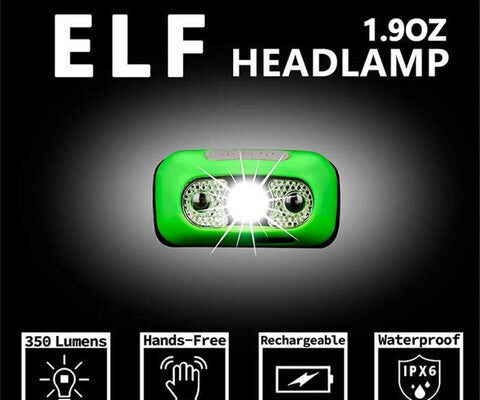
Headlamps are an indispensable piece of outdoor gear, offering unparalleled hands-free illumination. Imagine navigating a nighttime trail or setting up camp in the dark; holding a traditional flashlight would occupy one hand, limiting your ability to respond to unexpected situations or perform tasks efficiently. This is precisely why a reliable headlamp is crucial for nocturnal excursions, allowing you the freedom to utilize both hands for greater safety and productivity during your adventures.
When it comes to selecting the ideal headlamp, several factors come into play. Your decision can be influenced by aspects such as its functionality, cost, weight, overall size, versatility, and even its aesthetic design.
Battery Options
- Alkaline Batteries
These are the most commonly used batteries due to their widespread availability. While they offer a higher initial electrical capacity compared to lead-acid batteries, they are not rechargeable. A significant drawback is their performance in low temperatures (0°F), where their power output can drop to as little as 10-20%, and their voltage tends to decrease notably throughout use.
- Nickel-Metal Hydride (NiMH) Batteries
Capable of being recharged thousands of times, NiMH batteries maintain a consistent power output, though their total stored energy might not match that of alkaline batteries. They perform better in cold conditions, retaining approximately 70% of their power at low temperatures. For mountaineering, specialized high-energy NiMH batteries offer 2-3 times the capacity of standard cells, making them a preferred choice for extreme conditions.
- Lithium Batteries
Lithium batteries boast a voltage twice that of standard batteries, and their amp-hour capacity can be more than double that of two alkaline batteries combined. They maintain excellent performance at 0°F, comparable to room temperature usage, and are known for their stable voltage output, especially crucial at high altitudes. However, their primary downside is their higher cost.
Three Critical Factors When Selecting a Headlamp
- Water Resistance: Outdoor activities like camping, hiking, or other nighttime operations frequently encounter rain. Therefore, your headlamp must be adequately water-resistant. Without it, rain or immersion can cause circuit damage, leading to flickering or complete failure, posing a safety risk in the dark. When purchasing, look for a waterproof rating, ideally above IPX3. A higher IPX rating indicates superior water protection.
- Impact Resistance: A high-performance headlamp should be built to withstand drops and impacts. It should remain undamaged after falling from a height of 2 meters. During vigorous outdoor sports, a poorly constructed headlamp might easily break if dropped, leading to battery displacement or internal circuit failure. Always verify the product’s impact resistance rating or inquire about its durability before buying.
- Cold Resistance: This feature is vital for activities in northern regions or high-altitude environments, particularly for headlamps with external battery packs. Using lower-grade PVC wiring in cold conditions can cause the wire casing to stiffen and become brittle, potentially leading to internal core breakage. If you plan to use your headlamp in low temperatures, prioritize models specifically designed with cold-resistant materials and engineering.
Optimizing Headlamp Illumination
- Light Source
- Circuit Engineering
- Structural Design
Light Source
The brightness of any lighting device is fundamentally determined by its light source, commonly referred to as the bulb. In typical outdoor headlamps, the most prevalent light sources are LEDs or xenon bulbs. LEDs offer significant advantages in energy efficiency and lifespan, though historically they had weaker penetration. Xenon bulbs, conversely, are known for their strong penetration and long-distance beam, but they consume more energy and have a shorter bulb life. However, with rapid advancements in technology, LED performance has matured significantly. High-power LEDs are now mainstream, and their color temperature increasingly approximates that of 4000K-4500K xenon bulbs, albeit often at a higher cost.
Circuit Engineering
Evaluating a headlamp’s brightness or battery life in isolation isn’t sufficient. While the same bulb with the same current should theoretically produce identical brightness (barring issues with reflector or optical lens design), the lamp’s energy efficiency primarily hinges on its circuit design. An expertly engineered circuit minimizes energy consumption, meaning the same battery can provide the same brightness for a significantly longer duration.
Materials: A premium headlamp must be constructed from high-quality materials. Many high-end headlamps now feature PC/ABS alloy shells, which are remarkably thin yet robust, drastically reducing the lamp’s overall weight—similar to materials used in smartphone casings. Furthermore, a quality headband will offer excellent elasticity, a comfortable feel, superior sweat absorption, and breathability, ensuring comfort even during prolonged wear without causing irritation or discomfort.
Currently, many branded headlamps feature jacquard patterns on their main straps, typically made from refined, soft materials. In contrast, unbranded straps are often made from stiff nylon, which lacks elasticity and can cause chafing over extended periods. Generally, headlamps with superior craftsmanship also prioritize material selection. When buying, also consider the convenience of battery insertion and removal.
Structural Design
Beyond the aforementioned factors, when choosing a headlamp, it’s also crucial to assess its structural design for reasonableness and reliability. Check if the lighting angle can be adjusted smoothly and securely up and down while worn. Evaluate the power switch: is it easy to operate? Does its placement prevent accidental activation when stored in a backpack? Some headlamp switches are positioned on the dome, making them prone to turning on inadvertently due to movement within a backpack, leading to wasted battery power.
Selection Recommendations
- Reliability
- Brightness
- Functionality
- Updateability
- Supply (Batteries/Bulbs)
- Appearance
- Price
Choose your headlamp by carefully balancing your budget, personal preferences, the intended activity, and the environment. Consider how these factors combine to ensure you bring the most suitable lighting device to each event, ideally avoiding redundancy in performance.
We suggest prioritizing your selection in the following order: Reliability – Brightness – Functionality – Updateability – Supply Availability – Appearance. The ultimate brightness and maximum features should be sought only after reliability is assured. Always consider if the lamp allows for future upgrades and if replacement bulbs and batteries are readily available. Appearance and finish are desirable aspects. Price should be the final consideration, as a slightly higher investment often translates to better quality and greater safety. Spending a little more for even a 1% increase in safety during outdoor sports is always worthwhile. By establishing these purchasing principles, you will be able to find your ideal headlamp.
Important Precautions
- Headlamps are vital equipment, but remember to remove batteries when not in use to prevent corrosive damage.
- While some lamps are waterproof, and others merely rain-resistant, if waterproofing is critical to you, invest in a fully waterproof model. However, even rain resistance is often sufficient, as natural weather conditions can be unpredictable.
- The headlamp strap should feature a comfortable padding or design, not feel like a rigid band around your ear.
- Ensure the lamp’s holder or casing is durable. Avoid designs where the lamp can easily turn on by itself in a backpack, draining power or creating hazardous situations. A recessed switch design is often preferred. Also, consider how easily you can access or replace the battery.
- If your lamp uses traditional bulbs (e.g., Krypton, halogen, argon), which are brighter but generate more heat and consume more power than LEDs, always carry spare bulbs. These typically have a marked lifespan; for example, a 4 amp/hour battery might power a 0.5 amp bulb for 8 hours.
- When buying, it’s best to test the light in a dark environment. The light should be pure white, and a good reflector or adjustable beam focus is highly beneficial.
- For testing basic LEDs: if three batteries are typically installed, try installing two, then briefly short-circuit the third contact with a consistent conductor (like a key). If the light remains steady and bright for a relatively long time, it indicates good efficiency, making it suitable as a field lamp. However, a drawback of such simple circuit headlamps is often weaker waterproof performance (many are not waterproof).
- For night excursions, a traditional bulb (not LED) might be preferred as the primary light source because its effective illumination distance is typically at least 10 meters, offering consistent brightness for 6-7 hours. Many of these are waterproof. Carrying two backup batteries ensures worry-free nighttime operation.
Summary
Depending on its intended use, managing limited battery power can be approached in various ways: standard output and illumination have a direct correlation, while some advanced headlamps incorporate integrated lighting systems.
The relationship between light output and illumination distance: There is a direct link between illumination distance and light output, but this is predominantly shaped by the beam’s focus.
In practice, for the same luminous output, the central beam distance can vary greatly depending on the beam pattern. For instance, a 100-lumen output could create a broad floodlight covering 50 meters, or a highly focused, narrow beam reaching 200 meters.
Key Considerations
- The relationship between brightness and battery life is closely intertwined; achieving more of one often means sacrificing the other (unless battery capacity, and thus weight, increases).
- The shape or focus of the beam significantly influences the light’s effective projection distance.