Greetings, fellow outdoor enthusiasts! Today on the blog, we’re taking an in-depth look at a specific trekking pole. I recently acquired this particular model, the Tattenino, during my search for a lightweight trekking stick primarily intended to support a shelter or tarp. My goal was to find an option that struck the perfect balance between minimal weight and affordability. So, let’s delve into its performance and see how this trekking pole truly measures up!
Overview and Specifications
While often overlooked, the weight of a trekking pole is a critical factor, especially for ultralight backpackers. Most contemporary poles typically weigh less than 500 grams. However, for those committed to reducing every possible gram from their pack, every ounce counts. I observed a significant price jump for most poles weighing under 200 grams, so if you’re aiming for a balance of performance and value, a pole in the 200-250 gram range is often the sweet spot.
Dimensions and Mass
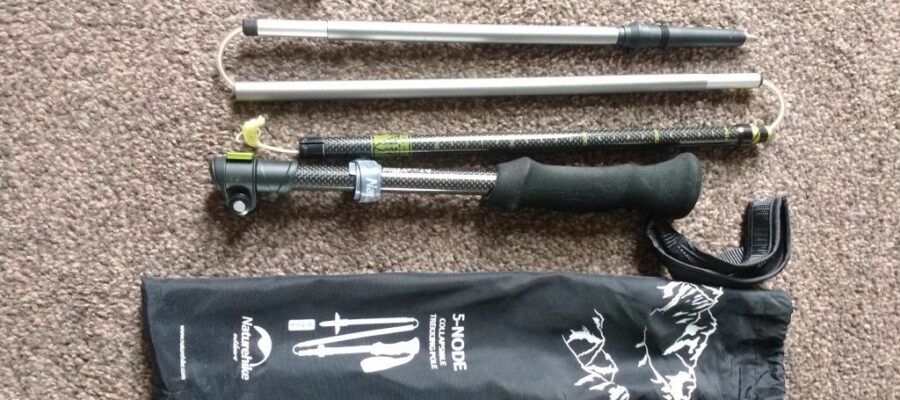
This particular trekking stick features a foldable design with four sections – or five if you count the protective cap at the end of the shaft. When fully collapsed, it measures a compact 36 cm in length, making it highly portable. Extended to its full capacity, the pole reaches an impressive length of 135 cm, suitable for various heights and terrains.
The manufacturer declared a weight of 234 grams. Upon conducting my own measurement, I found it to be just slightly over 237 grams (without its storage bag). As I’ve often mentioned on this blog, it’s always prudent to anticipate that the actual weight of outdoor gear might be marginally higher (or, if you’re fortunate, identical) than what is advertised.
Construction Materials
The shaft of this pole is crafted from a combination of carbon fiber and 7075 aluminum alloy, providing an excellent blend of strength and lightness. The tip of the pole is made from durable tungsten steel, ensuring reliable grip and longevity on diverse surfaces. Both the end cap and the handle appear to be constructed from EPA rubber, based on my assessment, though the official specifications page was somewhat ambiguous on this detail.
Field Test: Naturehike Lightweight Trekking Pole
Now, let’s examine how this pole performed during a recent outdoor excursion.
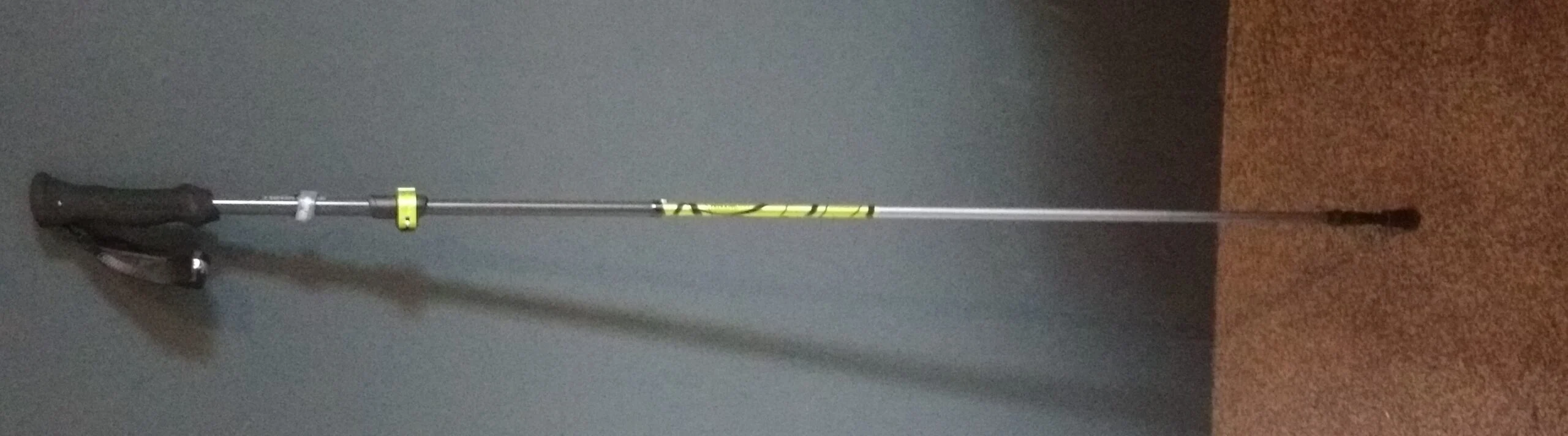
The Naturehike lightweight trekking pole, fully extended for deployment.
Extension and Retraction Mechanism
Initially, it took me several attempts (about five, to be precise) to figure out the proper technique for extending the pole when I first unboxed it. There’s definitely a knack to it, and the absence of clear instructions didn’t simplify the process! However, once the method is understood, expanding and collapsing the pole becomes a swift and effortless task, taking mere seconds. I found the included storage bag quite convenient for keeping the pole protected when not in use.
Performance in Camping and Hiking
In the spirit of full transparency, I must disclose that my initial walking experience with this pole has been limited. However, I plan to provide a more comprehensive review of its walking performance after more extensive use. From the approximate 30 minutes of walking I’ve undertaken so far, it feels notably comfortable and surprisingly robust. The handle has a satisfying, non-“plasticky” feel. Furthermore, I was pleased to discover that the wrist strap did not cause any irritation or awkwardness, which is a common issue I’ve encountered with other trekking poles!
When it came time to deploy the pole as a support for my shelter, I found it quick and easy to set up. I harbored initial concerns that the carbon fiber might prove too delicate to adequately support a tent or tarp, but it admirably held its ground, ensuring my shelter remained stable throughout the night – no midnight collapses here!
Naturehike Trekking Pole – Final Verdict
If you’re in the market for an affordable, lightweight, and reliable trekking pole, the Naturehike model is an excellent choice that will perfectly suit your outdoor needs.
And that concludes our review for this week, fellow adventurers! I trust you found this Naturehike Trekking Pole review insightful and helpful.
Conclusion
In summary, despite my initial limited time with this trekking pole, the first impressions are overwhelmingly positive, suggesting it is a comfortable, robust, and dependably built tool. During the brief 30-minute test walk, the pole demonstrated ease of handling and provided unwavering support, instilling confidence in its construction and ergonomic design. The handle offers a solid and durable feel, effectively avoiding the overly “plastic” sensation that can detract from user experience, while the wrist strap functioned flawlessly without causing any discomfort or hindrance – a common pitfall for many users.
The pole’s utility as a shelter support tool also surpassed expectations. Despite preliminary concerns regarding the carbon fiber’s potential fragility, it managed to support the tent without any issues, maintaining stability throughout the night. This performance highlights a successful balance between lightweight portability and the necessary strength for demanding outdoor applications, positioning it as a versatile option for both hikers and campers. Its rapid deployment and intuitive use further amplify its appeal, guaranteeing its reliability across a spectrum of scenarios, from providing walking support to acting as an emergency stabilizer.
While a more comprehensive review will naturally follow extended use in varied conditions, these preliminary observations strongly indicate that this trekking pole fulfills key criteria for functionality, user comfort, and structural durability. For anyone in search of a dependable companion for their outdoor pursuits, it presents itself as a practical and sturdy choice. Such encouraging early experiences are crucial in building trust in gear and lay a robust foundation for a more exhaustive evaluation in the near future.