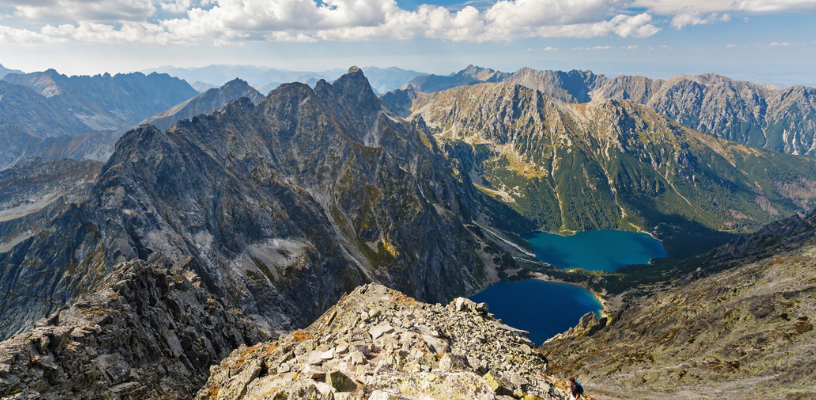
The Crown of Polish Mountains (Korona Gór Polski, KGP) is a prestigious and well-recognized list comprising the highest peaks from all 28 mountain ranges within Poland. These peaks are accessible via designated hiking trails, offering an incredible journey for enthusiasts. Undertaking this extensive series of expeditions demands thorough preparation, significantly enriches one’s trekking experience, and provides a superb opportunity for active leisure. Below, we outline exactly what the Crown of Polish Mountains entails, which iconic peaks are included, and how you can earn the coveted badge of its conqueror.
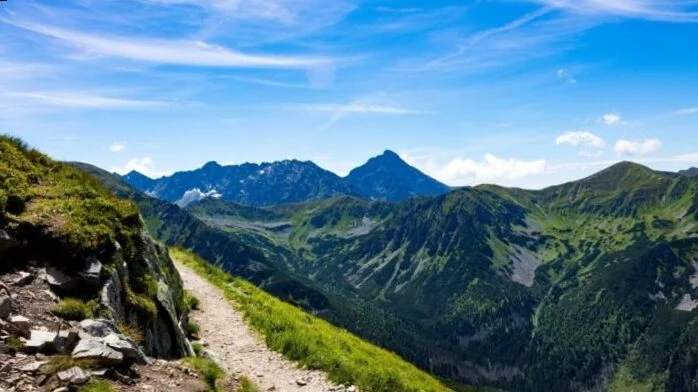
To promote less frequented, yet equally magnificent, Polish peaks, the Club of the Crown of Polish Mountains was founded in 1997. Initially operating under the patronage of the popular tourism magazine “Swój Kraj,” it has functioned as an independent organization since 2016. The club has attracted over 120,000 members, with more than 5,000 individuals proudly holding the title of “Conqueror of the Crown of Polish Mountains.” The founders’ vision was to inspire Poles to embrace mountain tourism, deepen their understanding of Poland’s diverse mountainous regions, and explore not only popular ranges like the Tatras, Karkonosze, or Bieszczady, but also lesser-known gems such as the Janowickie Rudawy or the Golden Mountains. This collection of 28 peaks offers more than just physical activity; it’s an invitation to discover the unique atmosphere, local culture, and often complex history of these indicated locations. Furthermore, it presents opportunities to savor regional cuisine, connect with fellow passionate hikers, and accumulate invaluable outdoor experience.
When ordered from highest to lowest, the list begins with Rysy – Poland’s highest peak. More precisely, it refers to its north-western summit, which straddles the Polish-Slovakian border at an elevation of 2,499 meters above sea level. Interestingly, a slightly higher point (2,501 meters) lies less than 30 meters to the southeast, on the Slovakian side. The exact height measurements of the Tatra’s highest point sparked considerable excitement at the time, with many hoping the “Polish” summit would exceed 2,500 meters. While this wasn’t the case then, the Tatras are gradually rising, suggesting this magical threshold might one day be reached.
Rysy stands out for another crucial reason: the vertical ascent required to reach its summit significantly surpasses that of all other peaks on the list. Starting from the hut above Morskie Oko, hikers face nearly 1,200 meters of elevation gain, a figure that climbs to 1,670 meters if the journey begins from the parking lot at the entrance to the Tatra National Park. This impressive elevation difference is comparable to the total height of the second peak on the list, Babia Góra.
Beyond Rysy, thirteen other peaks on the list proudly reach heights exceeding 1,000 meters. The entire collection culminates with Łysica, the highest point of the Świętokrzyskie Mountains, which, despite its modest elevation, holds the distinction of being the northernmost of the listed peaks and is also known as Mount Świętej Katarzyny.
Here is the official list of 28 peaks that form the Crown of Polish Mountains:
| 1. | Rysy | Tatras | 2499 |
| 2. | Babia Góra | Żywiec Beskids | 1725 |
| 3. | Śnieżka | Karkonosze (Giant Mountains) | 1603 |
| 4. | Śnieżnik | Śnieżnik Massif | 1423 |
| 5. | Tarnica | Western Bieszczady Mountains | 1346 |
| 6. | Turbacz | Gorce Mountains | 1310 |
| 7. | Radziejowa | Sądecki Beskids | 1266 |
| 8. | Skrzyczne | Silesian Beskids | 1257 |
| 9. | Mogielica | Island Beskids | 1171 |
| 10. | Wysoka Kopa | Jizera Mountains | 1126 |
| 11. | Rudawiec | Bialskie Mountains | 1106 |
| 12. | Orlica | Orlickie Mountains | 1084 |
| 13. | Wysoka (Wysokie Skałki) | Pieniny | 1050 |
| 14. | Wielka Sowa | Sowie Mountains (Owl Mountains) | 1015 |
| 15. | Lackowa | Low Beskids | 997 |
| 16. | Kowadło | Golden Mountains | 989 |
| 17. | Jagodna | Bystrzyckie Mountains | 977 |
| 18. | Skalnik | Janowickie Rudawy (Rudawy Janowickie) | 945 |
| 19. | Waligóra | Stone Mountains | 936 |
| 20. | Czupel | Small Beskids | 933 |
| 21. | Szczeliniec Wielki | Table Mountains | 919 |
| 22. | Lubomir | Makowski Beskids | 904 |
| 23. | Biskupia Kopa | Opawskie Mountains | 889 |
| 24. | Chełmiec | Wałbrzych Mountains | 850 |
| 25. | Kłodzka Góra | Bardzkie Mountains | 765 |
| 26. | Skopiec | Kaczawskie Mountains | 724 |
| 27. | Ślęża | Ślęża Massif | 718 |
| 28. | Łysica | Świętokrzyskie Mountains | 614 |
While the immense satisfaction and joy of reaching each summit are rewards in themselves, an additional powerful motivator for completing all climbs and an excellent keepsake is the official Conqueror of the Crown of Polish Mountains badge, granting entry into an elite group of successful adventurers.
This esteemed badge is awarded by the Club of the Conquerors of the Crown of Polish Mountains. Comprehensive details regarding club registration and the verification process can be found on kgp.info.pl. In simplified terms, the procedure unfolds as follows:
- You must register with the club (minimum age 7) and order an official KGP brochure.
- Ascend each of the 28 peaks (there’s no time limit or prescribed order), documenting each successful climb with a photograph at the summit and a stamp (e.g., from the nearest tourist information point or mountain hut).
- Once all 28 peaks are recorded, submit your completed brochure to the club.
- After a thorough review of your logbook and a meeting with the Conquerors Lodge Verification Commission (where a special interview will confirm your actual presence at the indicated locations through a “knowledge test”), you will receive your distinctive badge and officially become a full-fledged Conqueror of the Crown of Polish Mountains.
Assessing a trail’s difficulty might seem straightforward: lower mountains often imply easier ascents. However, there are exceptions, such as Lackowa in the Low Beskids, often referred to as the “Policemen’s Mountain” due to its challenging approach. Its path features one of Poland’s steepest sections (outside the Tatras), requiring an ascent of over 350 meters in elevation difference over a mere 2 kilometers.
For popular peaks like Babia Góra or Turbacz, multiple hiking routes exist, allowing you to select a path best suited to your fitness and preferences. You can easily compare estimated times for individual sections of mountain trails using resources like map-turystyczna.pl. Simply mark your starting and ending points, and the service will provide the shortest marked route, estimated walking time, the number of points for the mountain tourist badge, and a detailed route profile. This tool is invaluable for planning complex itineraries that traverse multiple peaks, not necessarily confined to the shortest possible path between them.
Undoubtedly, the greatest challenge among the 28 peaks is the ascent of Rysy. This isn’t just because it demands the largest elevation gain and requires a full day – often a dozen good hours – for the round trip from the Tatra National Park entrance at Palenica Białczańska. For many tourists, the red trail leading to Poland’s highest peak will be their first encounter with alpine-level difficulties. The most demanding sections of the route are equipped with “artificial aids” – fixed chains that hikers can, and often should, use for support on steep pitches. Exposure, the feeling of vast open space directly beside you during the Rysy climb, can also be a significant challenge for many. For such a long excursion, being prepared for sudden weather changes is crucial. Conditions at over 2,000 meters will differ drastically from those below in Zakopane; sunshine in the town can quickly turn to rain or even snow at the summit. However, a Rysy expedition typically marks the culmination of a broader project of conquering the 28 peaks, meaning most climbers venturing into the Tatras will already possess considerable experience, allowing them to confidently avoid common pitfalls.
Planning 28 separate mountain expeditions requires substantial effort. Beyond preparing for each ascent, selecting appropriate
hiking clothing
and equipment, it’s essential to meticulously plan travel logistics and often secure overnight accommodation. From an organizational standpoint alone, this is a demanding endeavor, which explains why many conquerors of the Crown of Polish Mountains take several years to complete the entire challenge.
Any such list of objectives inevitably sparks the question of how quickly it can be achieved. The 28 peaks of the Crown of Polish Mountains are no exception. It’s important to note that no one has physically hiked a continuous path connecting all of them. Record-breaking ascents (known as Fastest Known Times, or FKTs) involve climbing each peak and then traveling between mountain ranges by car. With such high stakes, every detail matters, leading to separate classifications for these records:
- **Assisted times:** These are achieved when the athlete(s) – as such attempts sometimes involve a two-person team – receive support from others, such as a car driver, provision of food and equipment, or physiotherapy at rest stops.
- **Unassisted times:** These involve the athlete completing the entire journey alone, without external assistance during the challenge.
Currently, the fastest recorded results are:
- **Unassisted:** Miłosz Szczęśniewski – 2 days, 13 hours, 36 minutes, 44 seconds (just over 61.5 hours).
- **Assisted:** Kacper Mrowiec – 3 days, 58 minutes (almost 73 hours).
- **Winter (Assisted):** Roman Ficek – 3 days, 10 hours, 50 minutes (below 83 hours).