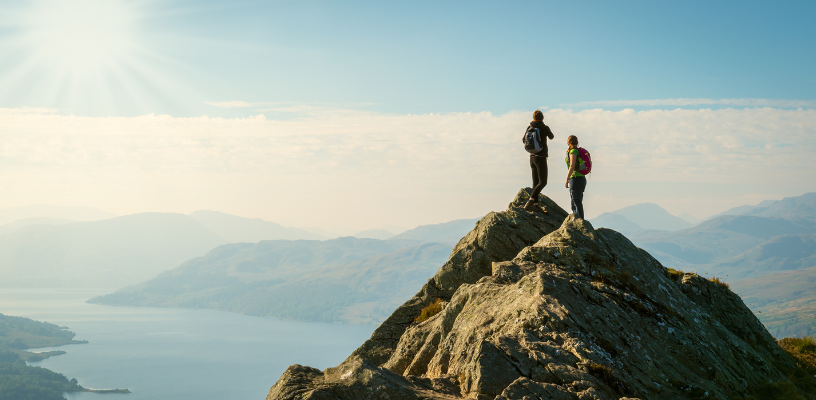
When the term “excursion” crosses our minds, images of mountain hikes often emerge. However, this simple association only scratches the surface of a far more profound and diverse outdoor activity: trekking. Delve into the world of trekking as we explore its origins, the various forms it takes, and practical advice to embark on your own wilderness journeys, both in the mountains and beyond.
The word “trekking” derives from the English “trek,” signifying a journey or arduous wander. Its historical roots are deeply embedded in the “Groot Trek” (Great Trek), the significant migration of the Boers, Dutch settlers who moved across southern Africa during the 1830s and 1840s. In the South African context, “trek” specifically referred to a challenging, often protracted journey. Modern definitions, such as that found in the Polish Plan Dictionary, define trekking as an expedition undertaken on foot through exotic, demanding, and often remote regions.
Typically, trekking involves multi-day expeditions across highly challenging terrain and through diverse, sometimes harsh, climatic conditions—think deserts, glaciers, or dense jungles. These routes frequently stray from established paths, venturing into wilderness areas where sleeping under canvas is the norm and participants carry all necessary provisions and gear. Consequently, successful trekking demands not only appropriate equipment but also a high level of physical preparedness.
Trekking’s emergence as a structured tourist activity traces back to the 1950s, largely attributed to British Colonel Jimmy Roberts. This legendary mountaineer and Himalayan explorer, notable for his 1953 first ascent of Mera Peak (a six-thousand-meter summit), established the pioneering mountain travel agency in Nepal in 1964. His agency specialized in organizing expeditions and immersive mountain experiences. Roberts, often hailed as the “father of trekking” for popularizing the term to describe journeys into the high Himalayas, significantly impacted the local economy, transforming mountain tourism into a vital source of income and employment for communities like the Sherpas.
Given the vast array of environments suitable for this pursuit, trekking can be categorized into several distinct types, each offering unique challenges and rewards.
Mountain Trekking
Often considered the quintessential form, mountain trekking seamlessly blends elements of hiking with varying degrees of mountaineering, depending on the route’s difficulty. Renowned mountain trekking routes globally include:
- The Alpine Route,
- Alta Via 1 (Italy),
- GR20 (Corsica),
- Sörmlandsleden (Sweden),
- The Inca Trail (Peru),
- Camino de Santiago (Spain),
- Torres del Paine (Chile),
- Everest Base Camp Trek (Nepal),
- Annapurna Circuit Trek (Nepal).
Within Poland, notable trekking routes include:
- The Kazimierz Sosnowski Main Beskid Trail – 519 km,
- The Carpathian Route – 445 km,
- The Main Sudety Trail – 440 km,
- The Promenade Path – 377 km,
- The Central Roztocze Pedestrian Route – 195 km,
- The Vulture Nest Trail – 164 km,
- The Kashubian Trail – 139.5 km,
- The Trail of the Three Plateaus (Ciężkowickie, Strzyżowskie, and Dynowskie) – 120 km,
- The Edmund Massalski Świętokrzyski Trail – 105 km,
- The Extinct Volcanoes Trail – 85 km (Lower Silesia).
Tropical Trekking
Tropical trekking involves traversing exotic locales characterized by intense heat, high humidity, and encounters with unique flora and fauna. Popular destinations for this adventurous pursuit include Mount Kilimanjaro in Tanzania, the dense jungles of Borneo (such as the Danum Valley Conservation Area), and the vibrant rainforests surrounding Chiang Mai in northern Thailand.
Desert Trekking
This challenging form of trekking entails journeys across arid desert landscapes, such as the vast Gobi Desert or the stunning Wadi Rum in Jordan. Desert trekking is exceptionally demanding due to extreme temperatures, unique wildlife, expansive open spaces with minimal shade, treacherous shifting sands on dunes, significant nocturnal winds, and limited access to water for washing. Success in such environments necessitates rigorous physical training and specialized equipment.
Glacier Trekking
Glacier trekking is ideal for individuals in excellent physical condition, equipped with specialized gear for ice travel, climbing, and self-arrest, including ice axes, harnesses, crampons, and robust safety lines. For those without prior experience, fundamental training courses are often available. Iceland stands out as a premier destination for glacier treks. Other notable locations include Steindalsbreen in the Lyngen Alps, the Aletsch Glacier in the Swiss Alps, and Nigardsbreen and Jostedalsbreen, both magnificent glaciers in Norway.
Polar Trekking
Polar trekking involves demanding expeditions across the Earth’s frigid polar regions, such as the Arctic tundra. Participants brave extreme temperatures, often navigate with dog sleds, and witness the unique phenomenon of white nights. These treks typically venture off-trail, may include crossing sections of frozen water, and offer the rare chance to encounter wildlife like penguins or polar bears. Notable polar trekking achievements include ascents of Antarctica’s highest peak, Mount Vinson (4,892 m), or Greenland’s Gunnbjørn Mountain (3,694 m).
Volcano Trekking
The objective of volcano trekking is to explore volcanic landscapes and observe their activity. A prime example is the nocturnal ascent of Stromboli volcano in the Aeolian Archipelago, Tyrrhenian Sea, to witness its fiery eruptions. These expeditions traverse post-eruptive terrains and the very slopes of the volcanoes themselves.
River Trekking
As its name implies, river trekking primarily involves navigating along or within river environments. This activity can encompass wading, rock-hopping, and even elements of packrafting or canyoning. Basic swimming proficiency is often essential to safely reach shore in the event of unforeseen weather changes or accidental inversions.
Cycling Trekking (Bikepacking)
Cycling trekking, often known as bikepacking, involves multi-day journeys undertaken on a specialized 28″ or 29″ trekking bicycle. These robust, single-track models are engineered to handle both paved roads and rugged natural trails with ease. Equipped with racks and panniers for carrying gear, they facilitate extended self-supported travel, often incorporating camping.
The primary allure of trekking lies in the opportunity to explore captivating, often remote, locations, revel in breathtaking vistas, and forge a deep connection with nature. Beyond these intrinsic rewards, trekking offers a myriad of additional benefits:
- Accessible year-round: Enjoyable in any season, adapting to various weather conditions.
- Inclusive activity: Suitable for nearly everyone, with customizable routes, intensity, and duration to match individual skill levels.
- Oxygenates the body: Promotes better blood circulation and cellular health.
- Enhances stamina and physical performance: Builds endurance and overall fitness.
- Boosts cardiovascular, respiratory, and immune system function: Contributes to holistic health.
- Improves mood and reduces stress: The natural environment has a profound positive psychological impact.
- Provides therapeutic effects: Immersion in nature can be deeply restorative.
- Offers an escape: A perfect way to disconnect from daily routines, urban hustle, and fast-paced living.
- Significant calorie expenditure: An excellent way to burn calories and manage weight.
- Strengthens self-confidence and self-esteem: Overcoming challenges fosters a sense of accomplishment.
- Develops quick decision-making: Presents unique situations requiring rapid problem-solving skills.
- Cost-effective: In its simpler or mountainous forms, it often involves relatively low expenses.
- Fosters cultural exchange: Provides opportunities to meet and interact with diverse cultures.
Trekking is an accessible physical activity for nearly everyone, provided you tailor the type, intensity, and duration of the route to your individual skills and experience. Expeditions can be broken down into manageable stages, allowing you to progress at a pace that suits your abilities. For your initial trek, opt for a classic, shorter route with a relatively straightforward path, ideally on gentle terrain with minimal technical climbing.
To ensure you’re prepared for unexpected weather or terrain challenges during your trek, it’s crucial to equip yourself with appropriate gear and accessories tailored to the expedition’s nature and difficulty. Consider the following items as fundamental equipment for almost any journey:
- Trekking Boots/Shoes – Choose models with a high or low ankle cut and a soft or rigid sole (D-rated soles indicate higher rigidity) based on the terrain, technical demands, and season.
- Thermoactive Base Layers – Essential for wicking moisture away from the skin, keeping you dry and preventing hypothermia.
- Thermal Shirt – Opt for quick-drying materials like polyester with elastane, ensuring adequate ventilation and unrestricted movement.
- Fleece or Hooded Sweatshirt – Can serve as a warm outer layer or an insulating mid-layer under a jacket, providing freedom of movement and thermal comfort.
- Rain/Softshell or Hardshell Jacket – A waterproof and windproof jacket (e.g., with a Gore-Tex membrane, especially for winter) is vital for protection against precipitation and strong winds. Learn more about choosing a rain jacket
Here
. - Hiking Trousers with Membrane – Look for long trousers, possibly with side zippers for easier donning or convertible legs for adaptability to changing weather.
- Trekking Socks – Merino wool socks are highly recommended for comfort and moisture management.
- Gaiters – Textile leg coverings that protect your shoes, ankles, and lower calves from debris and moisture.
- Cap, Beanie, or Multifunctional Scarf – For head and neck protection against sun, cold, or wind.
- Trekking Backpack with Carrying System – A comfortable and properly fitted backpack is crucial. Find more information on choosing backpacks
Here
. - Tent – For multi-day trips requiring overnight stays in the wilderness.
- Sleeping Bag – Rated for the expected temperatures.
- Sleeping Pad or Mattress – For insulation and comfort.
- Portable Stove – With a gas cartridge and cylinder for cooking.
- Cooking Utensils/Tourist Tools – Lightweight and durable options.
- Sunscreen and Lip Balm – Essential for protecting against UV radiation.
- First Aid Kit – Stocked with essential medications, bandages (elastic and various sizes), sterile gauze pads, adhesive plasters, insect repellent, burn creams, an NRC emergency blanket, a triangular bandage, UV filter cream, chemical hand warmers, and a multi-tool.
- Thermos – To keep drinks hot or cold.
- Trekking Poles – Especially beneficial for routes involving significant ascents or descents.
- Headlamp – With spare batteries, for visibility in low light or darkness.
- Map/GPS and Compass – For reliable navigation.
- Power Bank – To charge electronic devices.
- Water Bottle/Hydration System – Adequate hydration is key.
- Food Supplies – Tailored to the duration of your trip and access to resupply points.
- Sunglasses – To protect eyes from sun and glare.
Before embarking on your inaugural trekking expedition, familiarize yourself with crucial trail etiquette and regulations. Research restricted areas, understand permit requirements, and learn how to navigate designated paths responsibly and safely.